Mostrando postagens com marcador 2016. Mostrar todas as postagens
Mostrando postagens com marcador 2016. Mostrar todas as postagens
quinta-feira, 9 de fevereiro de 2017
Four Continents Championships; opening on 16th (Feb).- Video
170202 4CC CM 2種 por YzRIKO
“It’s the true era of quads.”
– Yuzuru’s words in the video, translated by yuzusorbet.tumblr.
(Will be cheering for you at 4CC. Yuzu,ganbatte!! Praying for you to be healthy and strong in all ways.)

quinta-feira, 2 de fevereiro de 2017
RISE OF THE JAPANESE POWERHOUSE

By Akiko Tamura
Source: ifsmagazine
The competitive figure skating spirit that we see today in Japan is the result of a carefully planned and well-executed program that was set in place more than two decades ago.
Many wonder how it has become such a strong nation in recent years, producing one champion after another. There is no one simple answer, but the result is a combination of various factors that have contributed to that nation’s rise on the global stages.
Figure skating has a long history in Japan dating back to the late 1920s in the men’s field and the mid-1930s in the ladies’ discipline.
The Japanese Skating Federation (JSF) was founded in 1929. Kazuyoshi Oimatsu, the federation’s first Olympic representative, placed ninth at the 1932 Olympic Winter Games in Lake Placid, N.Y.
Etsuko Inada, who won seven national titles, was the first lady to represent Japan at the Winter Games. In 1936, at age 12, she placed 10th in of a field of 23.
One of the first skaters to represent Japan in the modern era was Nobuo Satō, who dominated the sport domestically for a decade, winning 10 consecutive national titles from 1957 to 1966. It is a record that has not been broken to this day.
Satō’s fourth-place finish at the 1965 World Championships marked Japan’s highest result at the global competition. He was invited to go on tour with the medalists, but had to leave before it completed its run to compete at the national championships. “When I was competing it was a different era,” Satō recalled.
“That was a time everyone believed that if you are a student, school has to come first. So Japanese nationals were held during the spring break in March.”
Satō, the father of 1994 World champion Yuka Sato and the current coach of Mao Asada, retired following a fifth-place finish at 1966 Worlds and turned to coaching. Kumiko Okawa, his first student, placed fifth at the 1967 and 1968 World Championships. Satō later married Okawa, who is also a well-respected coach in her own right.
Tsuguhiko Kozuka, a three-time national champion, and his son, Takahiko Kozuka, the 2011 World silver medalist, were both coached by Satō.
Minoru Sano captured the first World medal, a bronze, at the first World Championships that Japan hosted in Tokyo in 1977. Shoichiro Tsuzuki, one of Yuzuru Hanyu’s first coaches, was Sano’s main coach; Satō worked with him on compulsory figures. “We had three strong men at the time: Sano, Fumio Igarashi (a two-time NHK Trophy champion and fourth at 1981 Worlds), and Mitsuru Matsumura (sixth at the 1980 World Championships),” Satō recalled. “The three of them challenged each other and the rivalry helped all of them to become better skaters. Rivalry was always the key.”
Emi Watanabe was the first lady to medal at a World Championships, capturing the bronze in 1979. Born to a Filipino mother and Japanese father, Watanabe was fluent in both Japanese and English. Her coach, Etsuko Inada, recommended that she to go to the U.S. to train, a move that was considered highly unusual at the time. At age 10, Watanabe relocated to the U.S. to work with Felix Kaspar, and later with Carlo Fassi.
Unlike today, it was rare in that era for Japanese skaters to train abroad, due to the language barrier and the financial considerations. Those factors made Watanabe’s successful path a hard act to follow. Watanabe became Japan’s sweetheart following those World Championships and “Emi” was the most popular first name for baby girls born that year. Then came Midori Ito, who completely revolutionized ladies figure skating in Japan.
CHANGING PERSPECTIVE

Machiko Yamada, who competed in the 1960s, recalled how different figure skating was during her era than it is today. “I did not enjoy skating because my coaches were very strict and I was afraid of them. That was the generation — everyone was pretty much like that at the time.”
Yamada could not wait to quit competing and when she did, she turned to coaching. Decades later Yamada, now 73, still works out of the same rink in Nagoya where she coached Ito to international glory so many years ago. Looking back on her own career, Yamada said she realized that if she had enjoyed skating more, she probably would have done better. “When I started coaching, it wasn’t like I had a big ambition, but I decided that I would make sure my students enjoyed skating.”
She remembers the day she first spotted a tiny 5-year-old Ito skating tirelessly around the rink. “It wasn’t like, ‘Wow, she has talent!’” Yamada recalled. “I noticed her because she was enjoying skating so much — she never wanted to stop.”
Shortly after joining Yamada’s class, Ito’s talent became apparent to everyone. Ito mastered four different triple jumps while she was still in elementary school. Yamada said she was fearless as a child. When Ito’s parents separated and her family situation became complicated, she began spending more time at Yamada’s home, moving in permanently at age 10. Yamada said her initial goal was for Ito to be able to financially support herself in the future through her skating.
Yamada ended up guiding Ito to so much more than that initial objective, taking her to nine national titles, the 1989 World crown and Olympic silver in 1992.
Before Ito, Tokyo had been the center of the skating universe in Japan and those who trained outside the capital had to prove that they could skate. Ito’s success put Nagoya on the national figure skating map. At the time, the JSF was constantly looking for role models outside of Japan, a practice with which Yamada did not agree. “Back then, we always looked up to the top Western skaters and tried to copy them,” Yamada recalled. “But I felt that as long as we were copying somebody, we would never become number one.”
Ito then started working on the triple Axel, a jump no woman had ever landed, and at the 1988 NHK Trophy she cleanly executed the first triple Axel in international competition. The following year, Ito became the first Asian to ever win a World title. The little girl from Nagoya had become a global skating sensation.
Though she was the favorite heading into the 1992 Winter Olympic Games in Albertville, Ito ultimately placed second behind America’s Kristi Yamaguchi. But Ito’s personal story and her Olympic success ignited a new generation of girls to take up figure skating and the sport started to gain popularity in Japan.
A NATION ON THE RISE
Without doubt, Ito was the catalyst for the generations that followed, and it was through her that the JSF gained a lot of valuable knowledge. “We learned that having just one talented skater was not good enough. We needed to build a strong team,” said Noriko Shirota, then the assistant director of JSF. (In 1994, she became the JSF director, a position she held for 12 years).
In 1992, Shirota and the JSF staff established a Youth Development Summer Camp, with the initial objective of finding and developing young talent to prepare for the 1998 Olympic Winter Games in Nagano. In the first year, about 100 skaters between the ages 8 and 12 were selected from all parts of Japan to attend the camp.
While they were being tested for their skating abilities, the youngsters had the opportunity to meet their rivals and witness first-hand what others were capable of, with the hope that this would help cultivate their competitive spirit.
The JSF then began sending novice skaters to international competitions so that they could gain experience from an early age. That program continues today and has become an important foundation for building a continuous roster of talented young skaters.
While one generation is competing at the elite level on the international stages, the next is being groomed. Fumie Suguri, Daisuke Takahashi, Miki Ando, Mao Asada and Yuzuru Hanyu were among those who were discovered at the development camps over the ensuing years.
One of the biggest discoveries at the inaugural camp was Shizuka Arakawa. Six years later, the then 16-year-old represented Japan at the 1998 Games, where she finished 13th overall. “When I competed in Nagano, I didn’t fully understand the meaning of being at the Olympics. I just thought I was lucky,” Arakawa recalled.
In 2004, she won the World title in Dortmund, Germany. Everyone was surprised, including Arakawa. “I thought that if I skated clean, I may have a chance for a medal, but I never thought of winning the gold,” she said. “My goal was to show the best performance before I retired, and I thought it was a nice finale to my competitive skating career.”
Though she was ready to move on, those around her were questioning her timing. The next Olympics were two seasons away so why quit now, they asked. Over time, Arakawa rethought her earlier decision, adjusted her plan and began to focus on the 2006 Olympic goal. “In Nagano, I was happy just to be there, but I decided that if I was to go to Torino, I’m there to compete,” she recalled.
The investment by the JSF started to pay off during the 2003-2004 season when the Japanese ladies swept the elite international podiums. Miki Ando won the World Junior and Junior Grand Prix Final titles; Fumie Suguri claimed gold at the senior Grand Prix Final; Arakawa won the World title and Yukina Ohta captured the Four Continents crown.
Things did not go quite as well the following season, but the seeds had been sewn and a new sense of rivalry had developed. The ladies team for the 2006 Olympic Winter Games was selected after a fierce national battle between Suguri, Arakawa, Ando, Yoshie Onda and Yukari Nakano. Asada placed second at those nationals but was ineligible to compete at the upcoming Games due to her age.
Three ladies were selected: Ando, 18, was the only lady to have landed a quadruple jump (a Salchow); Suguri, 25, was a two-time World bronze medalist, and Arakawa, 23, the 2004 World champion. Each one had a reasonable chance to win a medal, so none of them had to bear the pressure alone.

She became an overnight superstar, and 14 years after the Ito era, Arakawa’s victory created yet another huge wave of figure skating fever. Shirota said the difference between Albertville and Torino was that Japan had made the investment to develop a team that was highly competitive. As she had said after the Games in Albertville, Japan needed to build a strong team and it had successfully done so, especially in the ladies’ discipline. Osamu Kato, the official trainer for JSF, remembered watching Ando and Asada at the Youth Development Summer Camp years earlier.
“Their exceptional physical abilities were so apparent,” he said. “Especially Mao, who had spring like nobody else — even on the floor she was hopping and skipping when everyone else was just walking.”
Asada’s talent was closely monitored from the outset. An admirer of Ito, Asada had landed a triple Axel-double toe loop combination at a local competition when she was 13. While still in sixth grade, she was invited to compete at Japanese nationals, where she landed a triple flip-triple loop-triple toe loop combination.
“I wish I could have preserved her in a time capsule,” Shirota lamented.
Yamada, who was Asada’s coach at that time, deflects any credit for her student’s jumping abilities. “I know people say I’m a good jump coach, but it was totally by accident that good jumpers came to me,” said Yamada, who also trained Onda and Nakano, both of whom were considered solid jumpers. “Personally, I always preferred expressive skaters. When I saw the Asada sisters I was thrilled and thought that they could be all-round skaters.”
Asada left Yamada after six years and relocated to the U.S. to train with Rafael Arutyunyan. She subsequently moved to work with Russia’s Tatiana Tarasova in the lead-up to the 2010 Olympic Winter Games.
The first Japanese skater to win three World titles, Asada found success at any early age and her continued rise on the international stages over the following decade spawned more waves of figure skating enthusiasm in Japan.
Asada’s triple Axel legacy has flowed down to the next generation. At the Junior Grand Prix event in Slovenia this September, 13-year-old Rika Kihira successfully landed a triple Axel on her way to winning the competition, defeating her teammate and current World Junior champion Marin Honda.
“Rivalry seems to be always the key to reaching the next level,” Satō said.
THE MEN STEP UP
Unlike the ladies, there was a long pause between Sano’s accomplishment at the World Championships and the next Japanese man to become an international star. Takeshi Honda, who at age 14 became the youngest man to ever win the national title, went on to claim two consecutive World bronze medals in 2002 and 2003.
When Honda retired in 2006, another star was waiting in the wings. Daisuke Takahashi found success at age 15 when he claimed Japan’s first World junior title in 2002.
Though he struggled in subsequent years to reach the podiums at senior competitions, it all came together one night on Olympic ice in Vancouver in 2010. There, Takahashi wrote his own piece of history when he claimed bronze, and became the first Japanese man to medal at an Olympic Winter Games in figure skating. A month later he won the World title, another first not just for Japan, but also for Asia.
“I always envied that it was the ladies that got all the attention. I was hoping to bring some of the spotlight onto the men as well,” Takahashi said.
His achievements marked a turning point for men’s figure skating in Japan. Just as he had hoped, more attention was focused on the male skaters. Fans started attending competitions in droves and the media began to take the sport seriously.
Nobunari Oda, another big star to come out of Japan, won the 2005 World Junior Championships, and in his senior debut later that year, claimed medals at both of his Grand Prix assignments.
Kozuka was the next member to join the club following his victory at the 2006 World Junior Championships. When he joined Takahashi and Oda in the senior ranks the following season, Japan had a trio of men vying for the top spot at the national championships. This three-way rivalry raised the bar domestically and turned nationals into a heated affair. All three captured the title at one time or another during a seven-year period.
The competition became especially fierce when a young man from Sendai joined the battle in the fall of 2010. Hanyu, the 2009 Junior Grand Prix Final and 2010 World Junior champion, adored Takahashi, but that did not stop him from claiming the national crown in 2012. Hanyu successfully defended his title the following season and entered the 2014 Olympic Winter Games as the reigning national champion and Japan’s best hope for a medal in Sochi.
To everyone’s surprise, Hanyu waltzed off with the gold medal, becoming the first Asian man to win an Olympic figure skating title. He has, in his few short years on the international circuit, set the bar technically and made history repeatedly. He holds the record for the highest score ever awarded under the current judging system, which he earned at the 2015 Grand Prix Final. Although his score of 330.43 seems untouchable — at least for now — Hanyu shows no sign of slowing down.
He opened the 2016-2017 season with another historical feat, successfully landing the first ratified quad loop at the Skate Canada Autumn Classic in Montreal in September. “I achieved what I achieved last season. It is natural for me to move forward and try something new,” said Hanyu, 21.
Shoma Uno, his 18-year-old homeland rival, successfully executed a quad flip at the Team Challenge Cup last April. He is the only skater to have landed this jump in competition to date.
Japanese figure skating has come a long way since Sano won Japan’s first World medal almost 40 years ago. In the past decade, Japanese skaters have claimed seven World titles and 12 other medals of varying colors; two Olympic crowns, as well as two silvers and a bronze, and have won five World Junior titles.
Every nation has its highs and lows, but the development of the Japanese skating program has seen it rise from being a nation of hit and miss wins to one of the strongest in the world.
Behind the scenes, there is a wealth of talent coming up through the ranks, and the nation seems virtually guaranteed to continue the success it has enjoyed throughout the past 15 years.
Originally published in the November/December 2016 issue of International Figure Skating magazine.
Acho esse artigo esclarecedor, nele temos o vislumbre de todo o travalho que foi feito no Japão para se tornar uma potencia mundial da patinação artistica.
Talentos como Yuzuru Hanyu precisam ser encontrados, trabalhado e apoiados para que possam se desenvolver e nos maravilhar com seu talento.
Parabéns a todos os países que apoiam e trabalham seus talentos!
A tradução desse artigo para o português está aqui.
terça-feira, 31 de janeiro de 2017
Top figure skaters of the 2016-17 season (senior skaters only)
 |
Here’s a list of some of the top figure skaters of the 2016-17 season (senior skaters only). It doesn’t include everyone, naturally. If you’d like more detailed info on some of these skaters, you can browse through our competition previews! (Or read their Wikipedia bios.)
Men:
Yuzuru Hanyu (Japan) - 2014 Olympic Champion & World Champion, 4-time GPF Champion, 4-time Japanese National Champion
Javier Fernandez (Spain) - 2015 & 2016 World Champion, 5-time European Champion, 2-time GPF silver medalist
Patrick Chan (Canada) - 2014 Olympic silver medalist, 3-time World Champion, 2-time GPF Champion, 3-time 4CC Champion, 9-time Canadian National Champion
Nathan Chen (USA) - 2016 GPF silver medalist, 2017 US National Champion
Shoma Uno (Japan) - 2015 & 2016 GPF bronze medalist, 2016 Japanese National Champion, 2015 Junior World Champion
Boyang Jin (China) - 2016 World bronze medalist, 2016 4CC silver medalist
Denis Ten (Kazakhstan) - 2014 Olympic bronze medalist, 2015 World bronze medalist, 2013 World silver medalist, 2015 4CC Champion
Adam Rippon (USA) - 2016 US National Champion
Jason Brown (USA) - 2015 US National Champion
Mikhail Kolyada (Russia) - 2017 Russian National Champion, 2017 European bronze medalist
Maxim Kovtun (Russia) - 3-time European medalist, 3-time Russian National Champion
Ladies:
Evgenia Medvedeva (Russia) - 2016 World Champion, 2016 & 2017 European Champion, 2015 & 2016 GPF Champion, 2-time Russian National Champion
Satoko Miyahara (Japan) - 2015 World silver medalist, 2016 4CC Champion, 2015 & 2016 GPF silver medalist, 3-time Japanese National Champion
Anna Pogorilaya (Russia) - 2016 World bronze medalist, 2016 GPF bronze medalist, 2017 European silver medalist
Carolina Kostner (Italy) - 2014 Olympic bronze medalist, 2012 World Champion, 6-time World medalist, 5-time European Champion
Ashley Wagner (USA) - 2016 World silver medalist, 2012 4CC Champion, 3-time GPF medalist, 3-time US National Champion
Kaetlyn Osmond (Canada) - 3-time Canadian National Champion
Elena Radionova (Russia) - 2015 World bronze medalist, 2-time European silver medalist, 2-time GPF medalist, 2014 Russian National Champion
Wakaba Higuchi (Japan) - 2-time Junior World bronze medalist, 3-time Japanese National medalist
Maria Sotskova (Russia) - 2016 Junior World silver medalist, 2016 Russian National bronze medalist
Mai Mihara (Japan) - 2016 Japanese National bronze medalist
Karen Chen (USA) - 2017 US National Champion, 2015 US National bronze medalist
Mirai Nagasu (USA) - 2016 4CC silver medalist, 2008 US National Champion
Mao Asada (Japan) - 2010 Olympic silver medalist, 3-time World Champion, 4-time GPF Champion, 3-time 4CC Champion, 6-time Japanese National Champion
Gracie Gold (USA) - 2-time US National Champion
Pairs:
Meagan Duhamel/Eric Radford (Canada) - 2015 & 2016 World Champions, 2014 GPF Champions, 2-time 4CC Champions, 6-time Canadian National Champions
Wenjing Sui/Cong Han (China) - 2015 & 2016 World silver medalists, 3-time 4CC Champions, 2-time GPF bronze medalists
Evgenia Tarasova/Vladimir Morozov (Russia) - 2016 GPF Champions, 2017 European Champions, 3-time Russian National medalists
Aliona Savchenko/Bruno Massot (Germany) - 2016 World bronze medalists, 2016 & 2017 European silver medalists
Ksenia Stolbova/Fedor Klimov (Russia) - 2014 Olympic & World silver medalists, 2015 GPF Champions, 3-time European medalists, 3-time Russian National Champions
Vanessa James/Morgan Cipres (France) - 2017 European bronze medalists
Xiaoyu Yu/Hao Zhang (China) - 2016 GPF silver medalists
Cheng Peng/Yang Jin (China) - 2016 Chinese National Champions
Natalia Zabiiako/Alexander Enbert (Russia) - 2016 Russian National bronze medalists
Julianne Seguin/Charlie Bilodeau (Canada) - 2015 Junior World silver medalists, 2-time Canadian National medalists
Lubov Iliushechkina/Dylan Moscovitch (Canada) - 3-time Canadian National medalists
Ice Dance:
Tessa Virtue/Scott Moir (Canada) - 2010 Olympic Champions, 2014 Olympic silver medalists, 2-time World Champions, 2016 GPF Champions, 2-time 4CC Champions, 7-time Canadian National Champions
Gabriella Papadakis/Guillaume Cizeron (France) - 2015 & 2016 World Champions, 3-time European Champions, 2016 GPF silver medalists
Maia Shibutani/Alex Shibutani (USA) - 2016 World silver medalists, 2011 World bronze medalists, 2016 GPF bronze medalists, 2016 4CC Champions, 2-time US National Champions
Madison Chock/Evan Bates (USA) - 2015 World silver medalists, 2016 World bronze medalists, 2-time GPF silver medalists, 3-time 4CC medalists, 2015 US National Champions
Kaitlyn Weaver/Andrew Poje (Canada) - 2014 World silver medalists, 2015 World bronze medalists, 2-time GPF Champions, 2-time 4CC Champions, 2-time Canadian National Champions
Anna Cappellini/Luca Lanotte (Italy) - 2014 World & European Champions, 3-time European silver medalists, 2015 GPF bronze medalists
Ekaterina Bobrova/Dmitri Soloviev (Russia) - 2013 World bronze medalists, 2013 European Champions, 6-time Russian National Champions
Madison Hubbell/Zachary Donohue (USA) - 2014 4CC Champions, 4-time US National bronze medalists
Piper Gilles/Paul Poirier (Canada) - 2014 4CC silver medalists, 5-time Canadian National medalists
Source: soyouwanttowatchfs.tumblr.
quinta-feira, 19 de janeiro de 2017
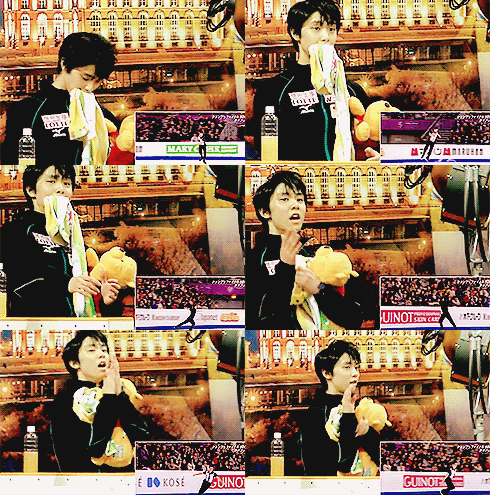
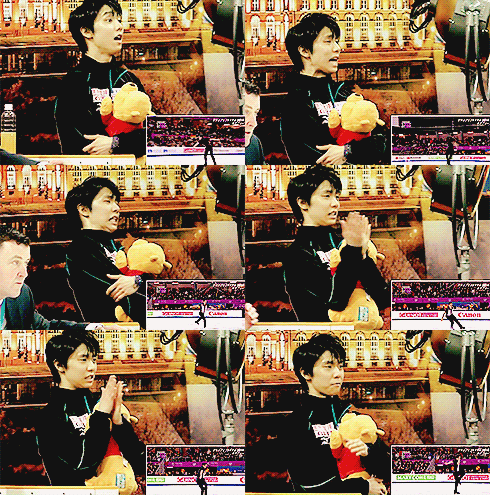
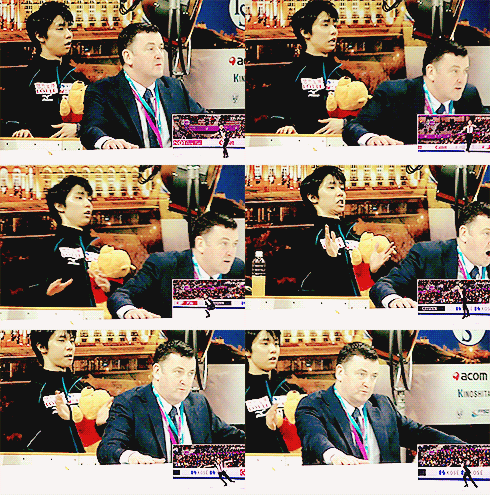
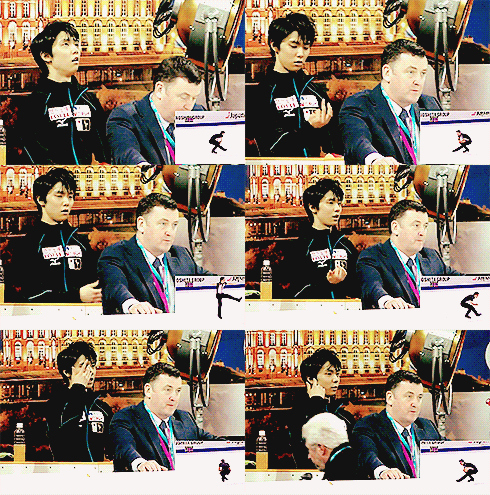
Yuzuru Hanyu watching Javier Fernandez’s free skate || 2016 GPF
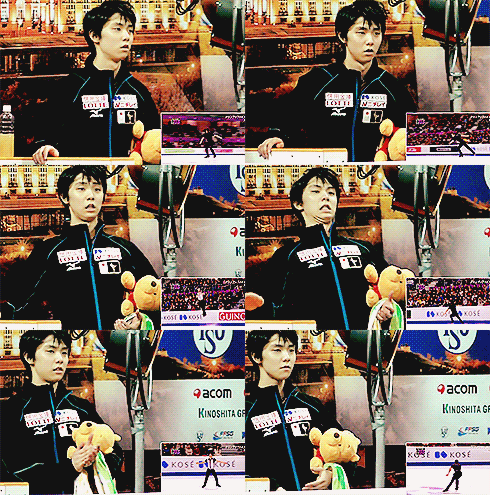
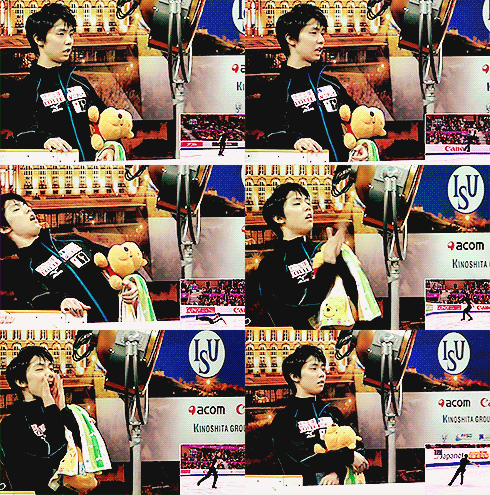
Eu queria ser uma mosquinha para saber o que Yuzuru contava no dedos< seria os pontos de Javier? Não é lindo o jeito que Yuzuru torce pelo amigo?!Source Gif: eggplantgifs.tumblr.
sábado, 31 de dezembro de 2016
Feliz Ano Novo - Happy New Year

Esse ano foi intenso, com muitos altos e baixos na minha vida, mas com certeza os pontos altos foram por conta da minha família, da patinação, de Yuzuru Hanyu e de vocês fãs de Yuzuru como eu.
Tenho muito a agradecer aos fãs de Yuzuru pelo mundo que se apoiam, ajudam e se divertem na mesma intensidade. Falamos muitos idiomas, português, inglês, japonês, italiano mas nos comunicamos em "Yuzurês". Ou seja, o idioma do respeito, carinho, força e dedicação.
Essas palavras lembram alguém? Pois é nos somos o reflexo da postura e atitudes de Yuzuru Hanyu.
Eu só quero desejar a todos que fazem parte dessa loucura boa que é ser fã de Yuzuru um feliz Ano Novo, que tenhamos muitas alegrias e sucesso.
A Yuzuru Hanyu eu desejo muita saúde, sucesso e alegrias; eu só peço que toda força, determinação, caráter, respeito e educação de Yuzuru seja multiplicada, que seu exemplo continue a inspirar outros jovens, assim com certeza teremos anos maravilhosos pela frente.
Obrigada Yuzuru Hanyu por existir!
Obrigada a minha linda amiga Hamaguri, ao pessoal do Tumblr., do Yuzuru Hanyu International Fan Group, do Golden Skate e ao Yuzuru Hanyu, il genio talentuoso del pattinaggio.
Vejo você o ano que vem em novas aventuras.

This year was intense, with many ups and downs in my life, but certainly the high points were for my family, skating, Yuzuru Hanyu and you Yuzuru fans like me.
I have a lot to thank Yuzuru fans around the world who support, help and have fun at the same intensity. We speak many languages, Portuguese, English, Japanese, Italian but we communicate in "Yuzurês". That is, the language of respect, affection, strength and dedication.
Do these words remind anyone? For it is we are the reflection of the posture and attitudes of Yuzuru Hanyu.
I just want to wish everyone who is part of this good folly that is to be a Yuzuru fan a happy New Year, that we have many joys and success.
To Yuzuru Hanyu I desire much health, success and joys; I only ask that all strength, determination, character, respect and education of Yuzuru be multiplied, that his example continue to inspire other young people, so surely we will have wonderful years ahead.
Thank you Yuzuru Hanyu for existing!
Thank you my beautiful friend Hamaguri, Tumblr., Yuzuru Hanyu International Fan Group, Golden Skate and Yuzuru Hanyu, the talent genius of the pattinaggio.
See you next year on new adventures.
This video shows a little who Yuzuru Hanyu is and why we like him on and off the ice rink
Here a summary of what was 2016 for Yuzuru Hanyu.
Mensagem dos fãs para Yuzuru Hanyu em seu aniversário
 |
| Google Images |
Esses vídeos são mensagens que foram enviadas por fãs do mundo inteiro para Yuzuru Hanyu em virtude do seu aniversário.
Essa foi uma campanha feita nas redes socias por aliajackson mais um trabalho lindo feito com amor em prol de Yuzuru e seus fãs.
Essas mensagens também foram enviadas para Yuzuru no Japão.
Assistam os vídeos e sintam quanto amor e carinho há neles, espero que essas mensagens continuem chegando para Yuzuru para que ele receba toda proteção e apoio que emanam de cada palavra e pensamento dos seus fãs.
Obrigada aliajackson.
 |
| marino-oniram.tumblr. |
This was a campaign done on social networks by aliajackson, plus a beautiful work done with love on behalf of Yuzuru and his fans.
These messages were also sent to Yuzuru in Japan.
Watch the videos and feel how much love and affection there is in them, I hope these messages keep coming to Yuzuru so that he receives all the protection and support that emanate from every word and thought of his fans.
Thank you aliajackson.
Here's a message about the videos:
Yuzu 22nd Birthday Wishes from Worldwide Fans
THANK YOU all for your birthday wishes to Yuzu!!
Altogether 700+ birthday wishes from worldwide fans in 70 countries (raw data at this link). My apology for the delay in the videos for the birthday messages as I’m struggling with some tech issues.
The first 5 parts of the videos are up. Please read each video description for the countries on that video.
The videos of messages from the following countries will be posted in due time (New Zealand, Netherland, Norway, Pakistan, Paraguay, Peru, Philippines, Poland, Puerto Rico, Qatar, Romania, Russia, Serbia, Singapore, Slovakia, Slovenia, Spain, Syria, Switzerland, Taiwan, Thailand, Turkey, UK, USA, , Ukraine, UAE, Uzbekistan, Venezuela, Vietnam).
quarta-feira, 21 de dezembro de 2016
Yuzuru Hanyu - LOVE Action
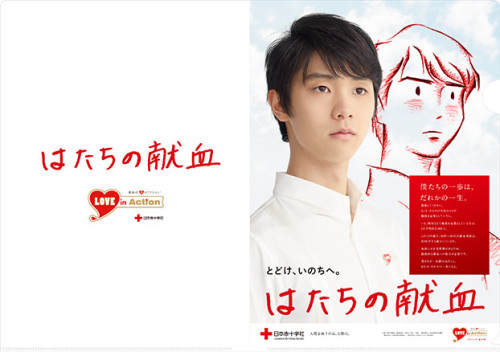

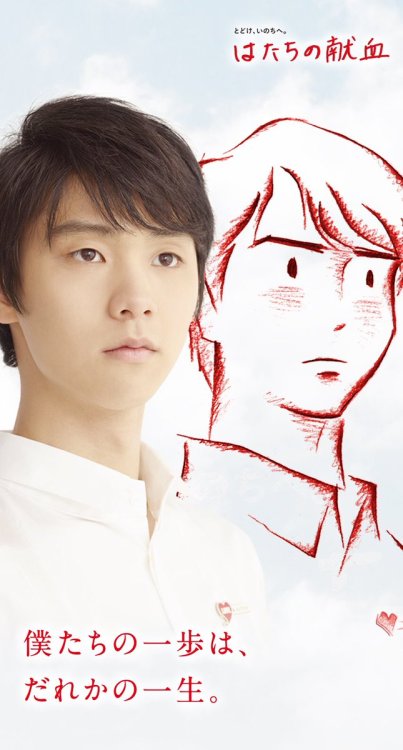
Come on folks, stick to the campaign!
We will donate blood in the name of Yuzuru Hanyu.
Source: ken-love.jp
segunda-feira, 19 de dezembro de 2016
2016 Japanese National Championships - preview
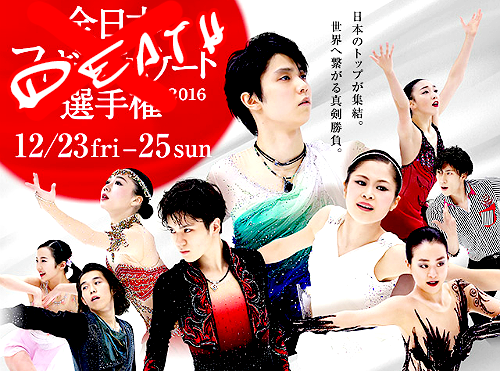
Everyone watch this. It’s the perfect summary of what happened in the men’s field since 2011:
Source: iguana012.tumblr.
2011: Daisuke Takahashi lands a surprise quad in his SP and wins; 17 year old Yuzuru Hanyu makes the podium for the first time and 14 year old Shoma Uno competes at his first senior Nationals
2012: Yuzuru Hanyu beats an almost perfect Daisuke Takahashi for his first National title
2013: The toughest competition (#bloodbath) in history. Six men are trying to make it to the Olympics.Tatsuki Machida shines, Yuzuru Hanyu wins his second title while Daisuke Takahashi and Nobunari Oda compete at their last Nationals. Machida, Hanyu and Takahashi are chosen as the representatives for the Sochi Olympics
2014: The abrupt and emotion filled retirement of Tatsuki Machida; Daisuke Takahashi comments: “I was shocked [by his retirement] because I thought he would go on to excel.”
2015: Yuzuru Hanyu wins his 4th consecutive National title
髙橋さんと振り返る名場面 (男性編) por hana02015
2016 JAPANESE NATIONAL CHAMPIONSHIPS COUNTDOWN
Source: iguana012.tumblr.

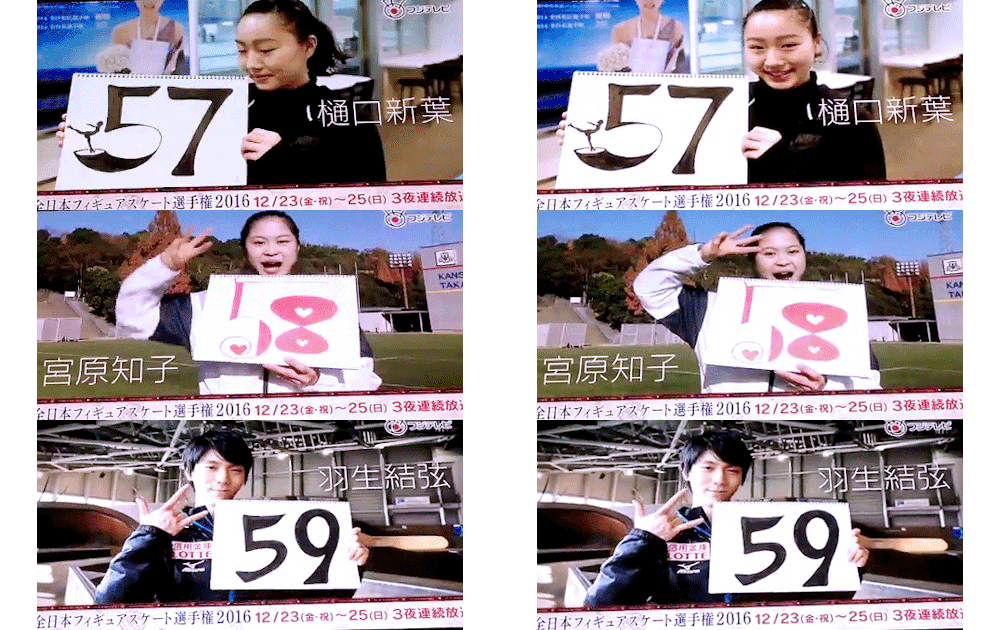

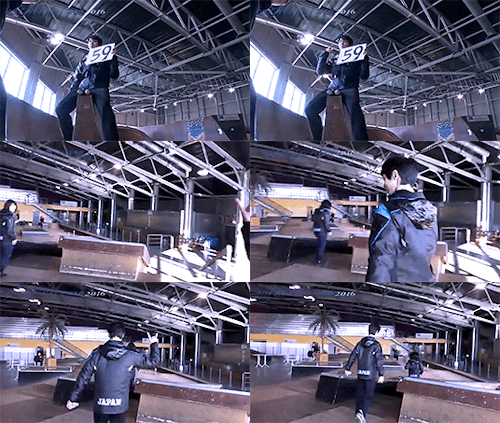
Exclusive Interview: Yuzuru Hanyu x Tomoko Nagano

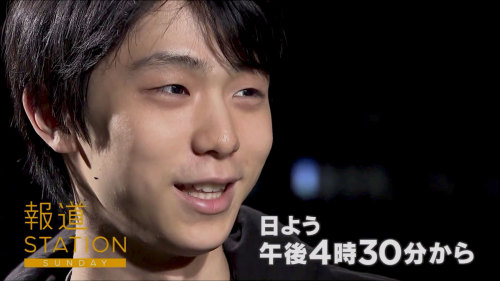
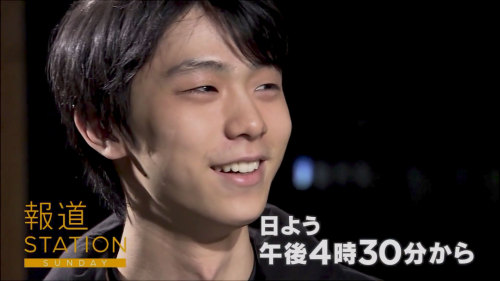

(from the 1.09 minute mark of the video)
Nagano: Thank you for your hard work.
Yuzuru: Thank you.* (sees bouquet) I’m surprised!
Nagano: Congratulations on winning an unprecedented four consecutive GPFs. (presents him with huge purple bouquet)
Yuzuru: Thank you very much.
Nagano: Thank you for being with us today. I am Tomoko Nagano. Nice to meet you.
Yuzuru: Nice to meet you.
Nagano: Actually, we have prepared a few photos here of your GPF victories leading to your four-peat. I think that there must be different thoughts and memories for each respective year, but for this particular victory, do you have any different thoughts compared to your prior victories?
Yuzuru: Indeed. Comparatively, this time I finished the competition without thinking about winning consecutively.
Nagano: Ah, is that so.
Yuzuru: Somehow, I think this is probably partly because what I was challenging myself to do was tremendous. Furthermore, probably because last season’s three-peat was a historic first for Men’s singles skating, I was more nervous then. As that was over, I think my thoughts were if I can continue this streak from that point onward, what will it become. (laughs)
Nagano: I see. Your short programme this season is Let’s Go Crazy.
Yuzuru: Yes. My face is crazy.
Nagano: This pose is totally different from what you have done to date, feels a little naughty.
Yuzuru: Feels very naughty.
Nagano: Did you consciously create such an atmosphere with the atmosphere of the song in mind?
Yuzuru: Yes. It was a bit quieter, a bit more cool when it was being choreographed, but somehow once I started performing it it was totally not cool at all. It was too wild and I was thinking, is this all right? (laughs)
Nagano: Really? Like rock?
Yuzuru: Yes, very rock and very enjoyable.
(Clips from GPF 2016)
Narration: Yuzuru Hanyu-senshu, who has achieved four consecutive GPF victories for the first time in history, continues to grow every season. This young man who just turned 22-years old this month, has said many things that left deep impressions.
Yuzuru: I think the power of words really exist.
Narration: We explore Yuzuru Hanyu’s strengths, weaknesses and the thoughts in his heart through his sayings to date.
Nagano: First of all let’s start with this phrase “take one step forward and another step forward( 一進一進 )”. Honestly, when I saw in a TV programme that you had written this, I thought “Ah, these words are really characteristic of Hanyu-san”.
Yuzuru: After all, I have feelings of not wanting to retreat even a single step. Of course there are many times that I fail, even in practice there are times when it becomes like I’m escaping, and there are many times when things are painful, but single-mindedly, this time, this season, I only feel like advancing forward.
Nagano: Even for Hanyu-san, there are definitely moments when you feel like you will lose heart?
Yuzuru: There are. There are times when I cannot land my jumps and I start feeling like I want to give up.
Nagano: During those times, what kinds of feelings give you a rough time?
Yuzuru: Haha… what kinds of feelings give me a rough time? Hmm, I would feel very much that I don’t want to do it anymore.
Nagano: In those times, did you give up?
Yuzuru: I don’t give up. As I think that the point and time when I feel like I want to give up is a start.
Nagano: I see.
Yuzuru: When I think I want to give up, that this is impossible, at that moment I do it with a feeling of if I can do this without mistakes from this point onwards, won’t it be cool.
Nagano: Listening to your words, indeed that is a type of strength. When you feel like giving up, when things go wrong, to say no, this is a new start– such a change in mindset is rarely achievable.
Yuzuru: For me it is also rarely achieved (laughs). But fundamentally I do not want to lose in competitions. Because I strongly want to give good performances in competitions. This is my starting point. How should I put it…I think without my competitive streak of hating to lose I would not be able to come so far.
Narration: “Take one step forward and another step forward” means, precisely when things don’t go well, that is the time to mount a challenge. It is a phrase that arises from a strong positive spirit. It is that positive spirit that led him to say the following words in an interview at a training camp when he was in junior high school:
Yuzuru: My target is to win the gold medal at the Olympic Games.
Yuzuru (present day): I said the same thing to the people around me. Because since I was a child I thought that I could win the Olympic Gold medal. Since I started skating (laughs).
Nagano: That is amazing!
Narration: On the other hand, he has also said the following words:
Nagano: “My greatest fear is what should I do when I stop growing and developing (いちばん怖いのは成長が止まったときにどうすべきか)”. You think about such things? Though this did not really happen?
Yuzuru: When I was a fourth grade student in elementary school, the rink closed down due to financial difficulties. I lost my home rink and it was a time when I was completely unable to do triple jumps. To me that was the most painful. I really felt that I had stopped growing and developing. Only it was not that I had stopped growing and developing in the sense of having reached my limits, but I did not know how I could continue growing and developing. There were such times when I did not know what how I could do to make it possible to grow and develop.
Nagano: At that time, did you seek advice from others? Or did you think through it on your own?
Yuzuru: Ultimately I think I broke through the situation myself. Using that opportunity, though for me they were high targets, I set my sights towards a very high target. Really, I wonder how to say it.. to the extent that I was clinging on precariously by my fingertips. To the extent that I wasn’t sure if I could hang out with my fingertips or not if I jumped, such was the target I worked very hard to close onto.
Narration: When growth and development stops, setting a target that is situated precariously at the limits of one’s reach.
Yuzuru: I’m not sure if it should be said as having confidence, or excessive self consciousness. (laughs)
Nagano: Now, I think that is different. At that time when you had stopped growing and developing and you didn’t know how to continue doing so, you push yourself to a great extent.
Yuzuru: Yes.
Nagano: This reminds me of your interview with Shuzo Matsuoka-san.
Yuzuru: (laughs). The edge of a cliff (崖っぷち).
Nagano: Shouting “Yahoo!” at the edge of a cliff.
Yuzuru: Yes.
(Clip of Yuzuru’s post-NHK Trophy interview with Matsuoka-san.)
Narration: This is from the interview conducted with Shuzo Matsuoka-san after NHK Trophy last month.
Matsuoka: There is this impression that Hanyu-san is someone who does not make mistakes.
Yuzuru: Yes, there is. There is such pressure, it is expectation. Pressure is expectation. I love pressure, I love being at the edge of the cliff and going “yahoo~” (laughs) Something like that.
Narrator: “Love being at the edge of a cliff” was originally Matsuoka-san’s words.
Yuzuru: Really, (my career) has been full of being at the edge of the cliff. There was the time when the rink closed down due to financial difficulties, and then it re-opened and I returned there and then the earthquake happened and it was lost again. First of all there was being at the cliff edge of being unable to make use of the training environment.
Nagano: Among other skaters there is hardly anyone else who has such experiences.
Yuzuru: I think there is hardly anyone else. Just being able to scramble up from there to this point, as I think it is probably something very rare, in that sense I think it is ok even if I am cornered.
Nagano: Plus, you love being at the cliff’s edge?
Yuzuru: Yes, I love it.
(Clips from Yuzuru’s FS at GPF 2016)
Narration: Hanyu-senshu who can even enjoy being at the edge of a cliff, and even adversity can be turned into nourishment. But he says sometimes weakness shows on his face. In those moments, the magic words he uses are:
Nagano: While watching Hanyu-san’s strength, there is definitely this (holds card with “I can do it, I can do it, I can do it”) Is this some kind of routine?
Yuzuru: There are many.
Nagano: There are many routines. I am not an expert but even I can somehow understand when I watch what you are doing. This time what you did was this (holds up card with “I can do it, I can do it, I can do it (できる できる できる) ”
(Clips from right before Yuzuru’s FS at GPF 2016 when he repeats to himself “I can do it, I can do it, I can do it.)
Narrator: I can do it, I can do it, I can do it. These are his words immediately before his performance.
Yuzuru: I did it this time too. At this GPF I relied very much on these words. Even though I said I had confidence, still, when it is time for the competition, somehow there will be loss of confidence, anxiety, things like that. There are also occasions when negative images suddenly well up in the mind. If I speak it out loud and hear it with my ears, I think perhaps the mind will take on that illusion, and this is why I did it.
Nagano: I see. It’s like the power of words.
Yuzuru: Yes. I think the power of words really exist.
Narrator: The method to overcome weaknesses is autosuggestion. One more pre-competition routine is…
Nagano: The music you always listen to immediately before your competition. Is that the music for your competitive programmes?
Yuzuru: No, they are not. Most of the time I’m singing along. While its only lip-synching, I sing along to various songs.
Nagano: Right before your performances, do you listen to your music for image training?
Yuzuru: Not really, when I listen to it too much and get too used to it, during competition when it starts playing in the arena, there are times when it feels the same as when I listen to it on my earphones. It depends on the situation, but there are also times when I stay away from the music and only listen to it when I perform in competition.
Narration: Looking towards the new season, the new words are…
Nagano: Lastly, what is Hanyu-san looking forward to right now? Could you express them in words?
Yuzuru: My honest feelings right now? My honest feelings right now…(places marker pen beside his cheek while he thinks, pen touches his cheek for a moment and leaves a mark. Rubbing the mark) Did it leave a mark here just now? It’s ok? I stained it. I often do this. Never mind. Let me think about it a little.. what is good? Ok.
Yuzuru: Done. (holds up card) “To link/bind/join/secure ( 結ぶ)”.
Nagano: Oh! What do you mean by this?
Yuzuru: It includes the meaning of my name. There is definitely also the meaning that the growth and development and practice from now, from the GPF towards the Japanese National Championships, are linked to results. To put it another way, the four-peat could not have been accomplished without various linkages. From now on, I want to treasure every moment. In addition, I hope to secure good results, and to connect.
End of interview
Nagano in studio with two other hosts: Actually, after the interview, he said “Excuse me, can I have pen and paper?” Hanyu-senshu thought of another phrase and wrote it for us. It is here (opens notepad) “From now on, be godly! (これから, 神る!)” **
Co-host: Isn’t he already godly?
Nagano: Indeed! I said to him the same words, aren’t you already godly? He said, no, totally not at all. Actually, right now, Hanyu-senshu said he is trying to eliminate his routines. For example, things like with which leg he enters the rink and so on, when they cannot be done are likely to cause him to feel troubled. That’s why he is working hard to eliminate all of them.
*T/N: Yuzuru said “Otsukare” when he first entered the room. In certain contexts otsukare/otsukaresama deshita can also be used to mean “hi” or “thank you”, I have chosen to translate it as thank you here.
**T/N: 神る/神ってる is a term recently coined by Japanese baseball team Hiroshima Carp’s manager Koichi Ogata to describe the miraculous performance of Seiya Suzuki at crucial moments such as when he hit two home runs to help the Carp win the Central League title this year after a 25-year gap since their last title. The term has achieved widespread popularity. Incidentally, the Hiroshima Carp is Yuzuru’s favourite baseball team since childhood; see how happy he was to receive an autographed team uniform last year^ ^:

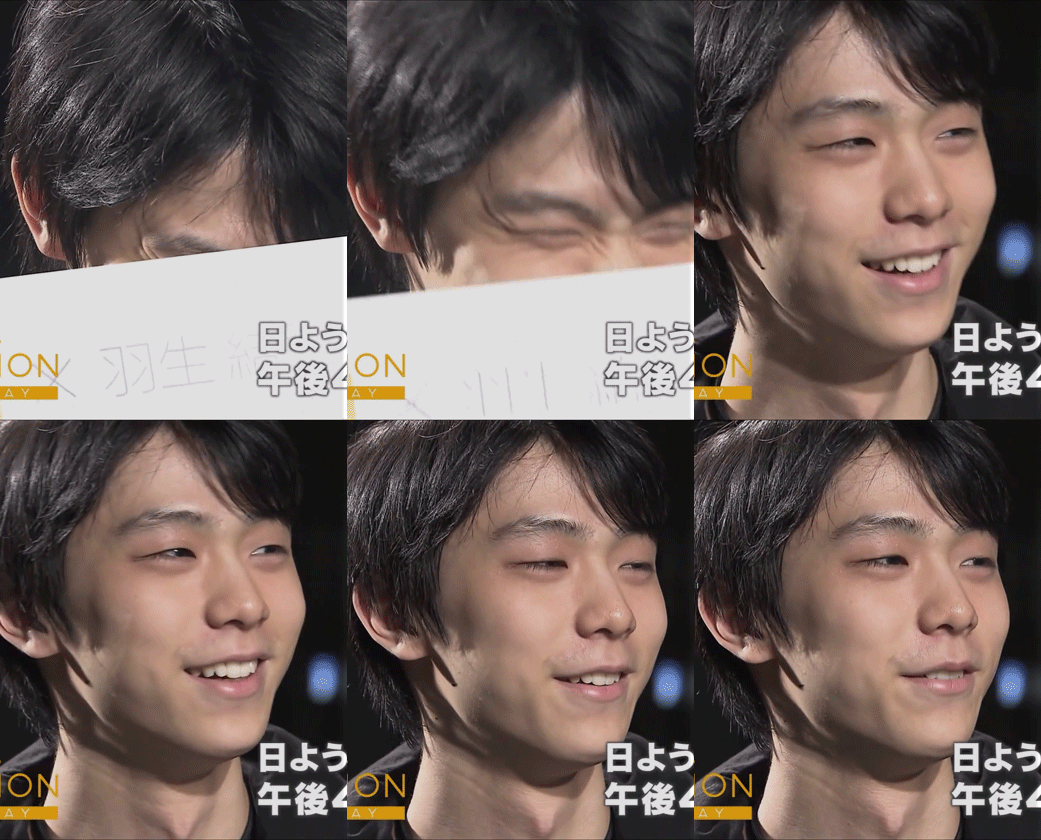
161218 独占インタ 羽生×長野 世界制した‘’自己暗示力... por yuzu2016
Source photos and gif: nanoka12.tumblr., hanyuzu94.tumblr.
Source video: pino2016
Translated by nanoka12.tumblr.
Grand Prix 2016 - Novas fotos (2)

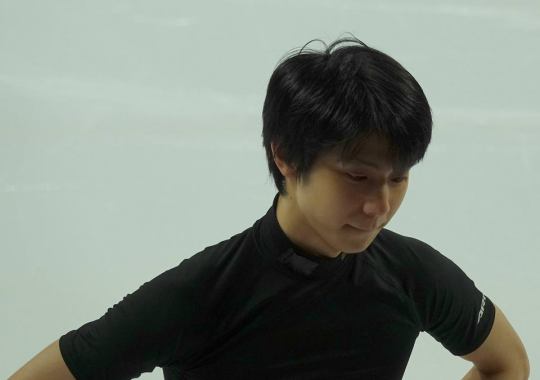 |
| What to say! |
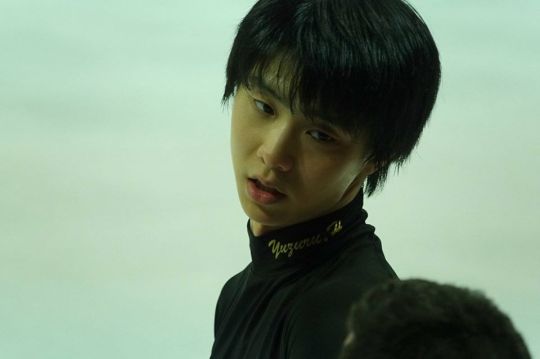

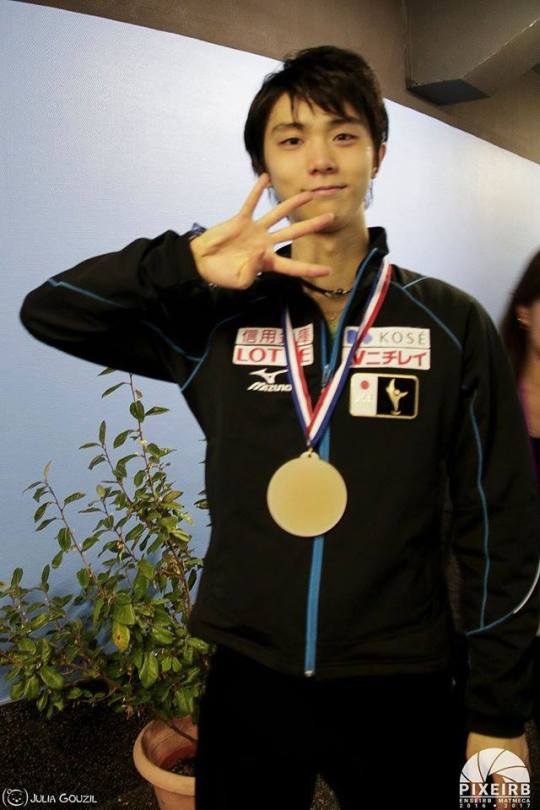
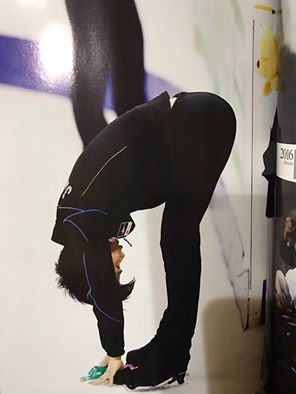 |
| Flexible |
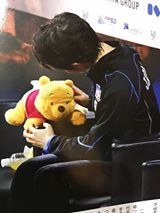 |
| Always taking care of Pooh |
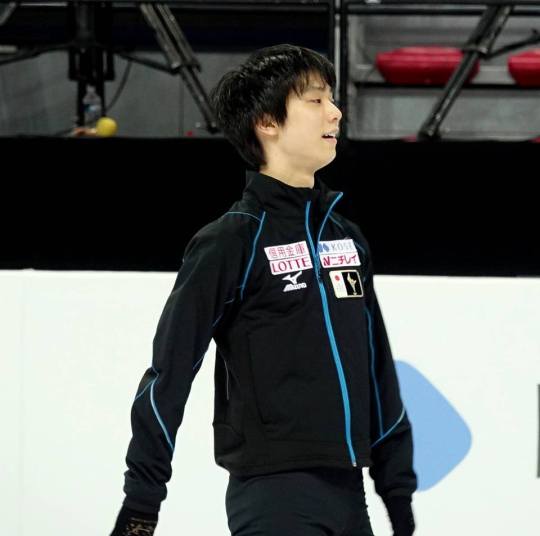
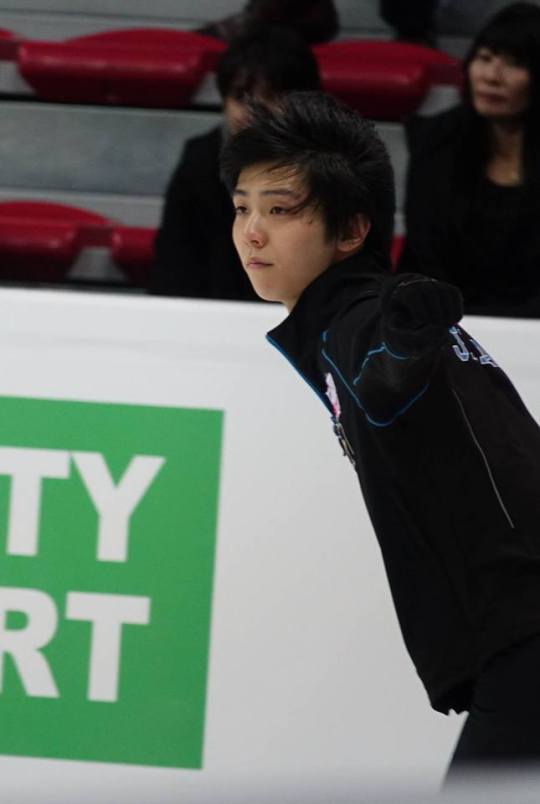
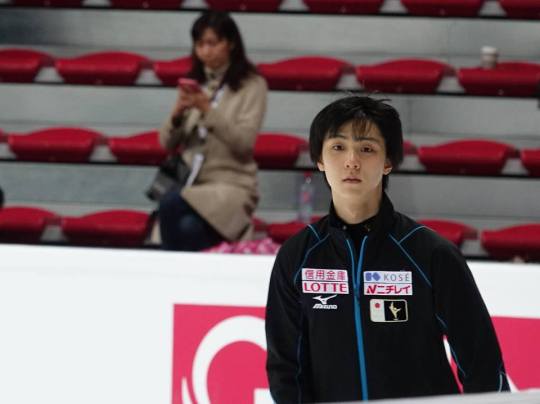
How many wigs are said “four times champion”
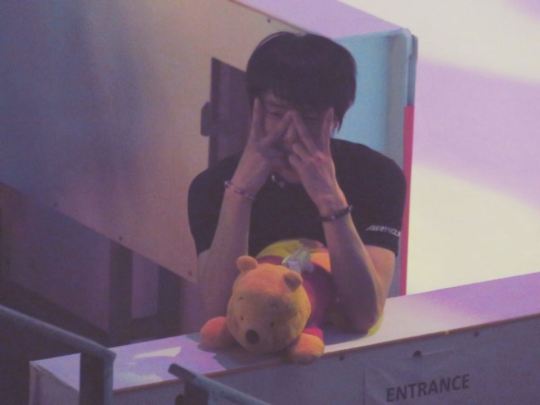

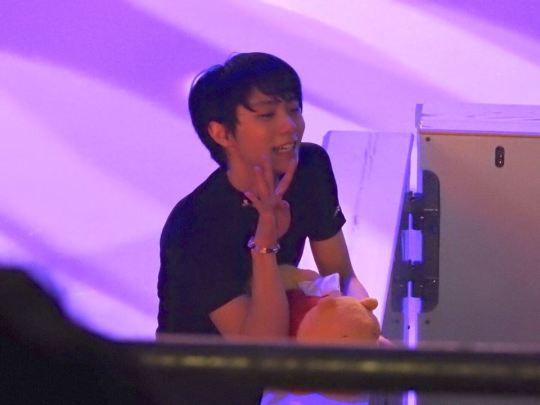

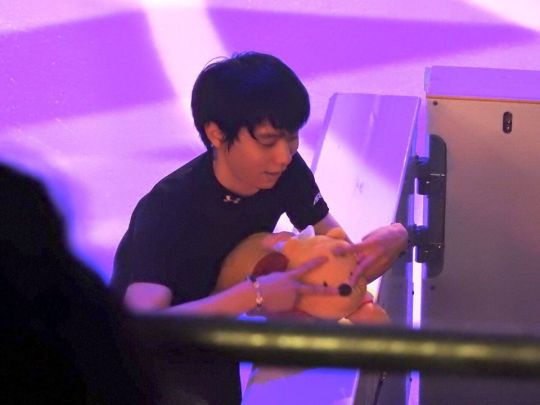
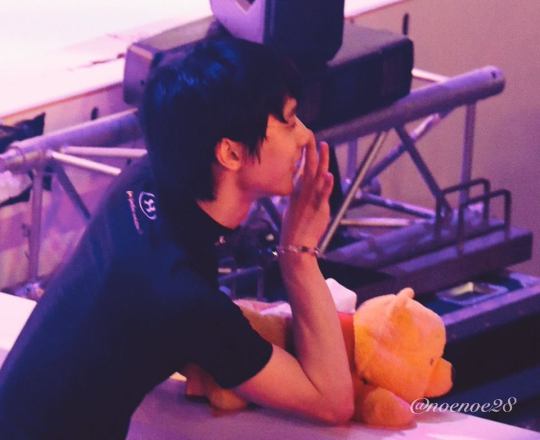
Source: @mikappa78, @ao_4a1lo3s,@noenoe28, Hanyu Yuzuru ThaiFan (FB)
Grand Prix 2016 - Novas fotos
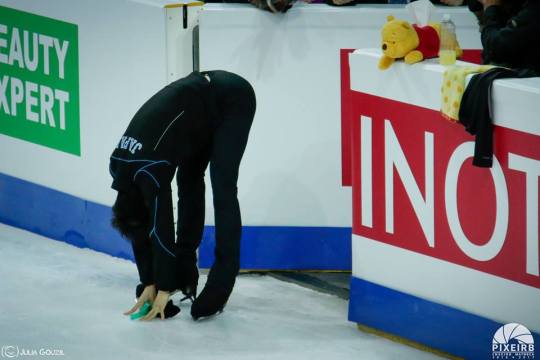 |
| Always respecting the ice |
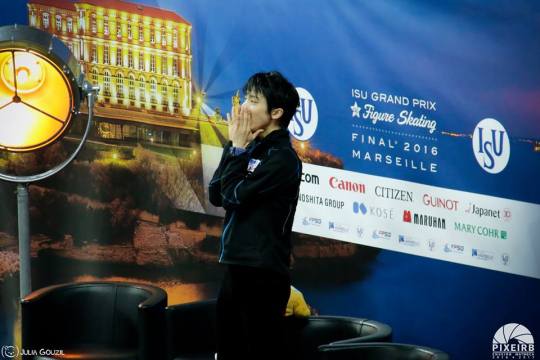 |
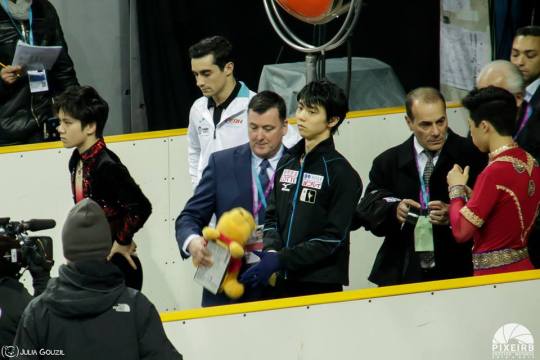
| Cheering for Javier |
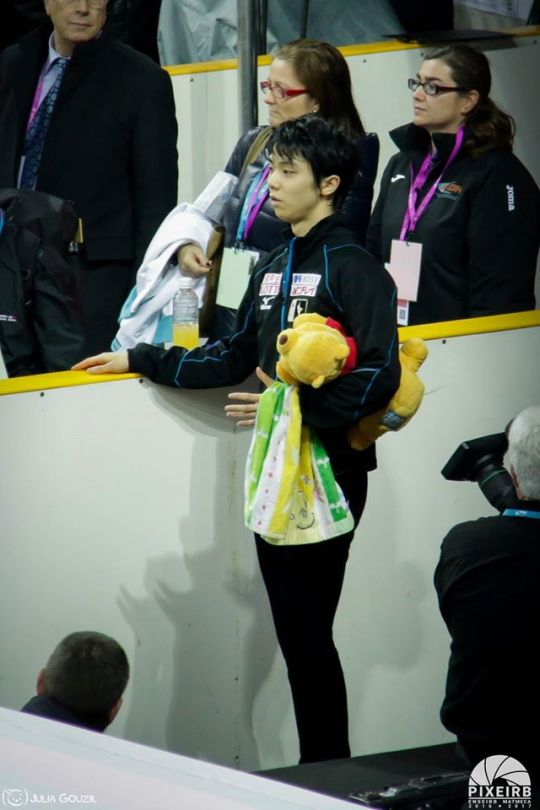 |
| Cheering for Javier |
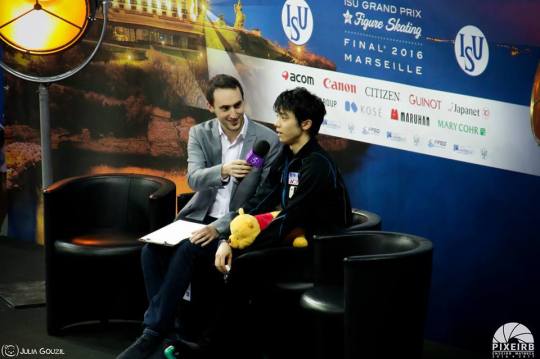
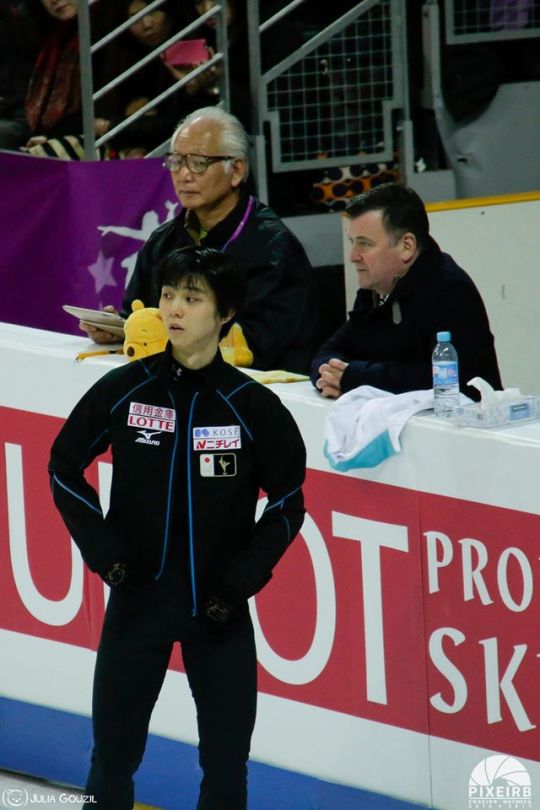 |
| The guardian angels |
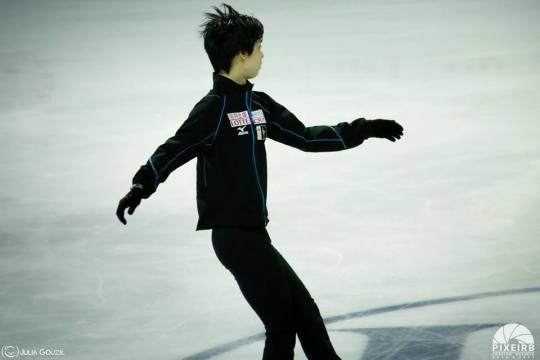
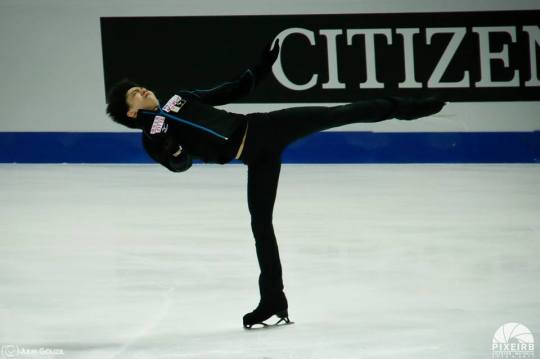
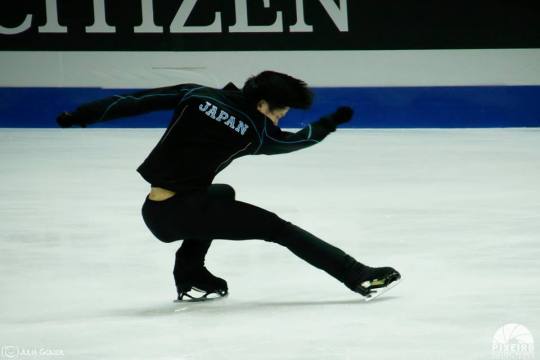 |
| Small blouses ?! |
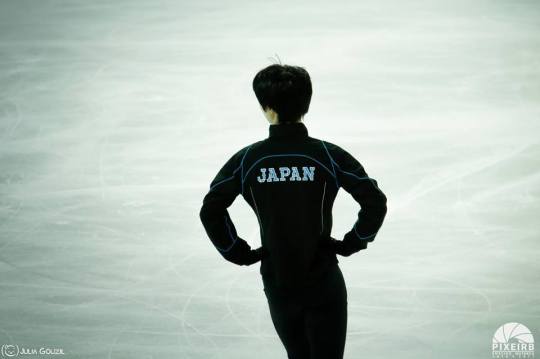
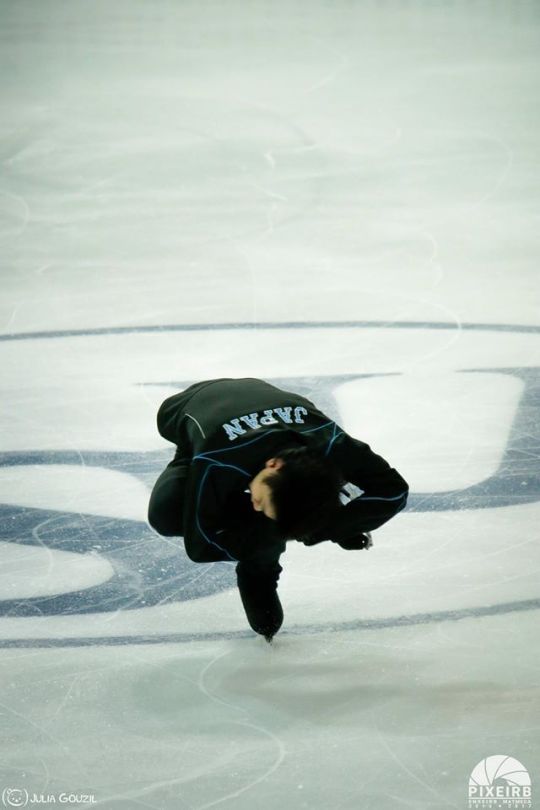 |
| Contortionist |
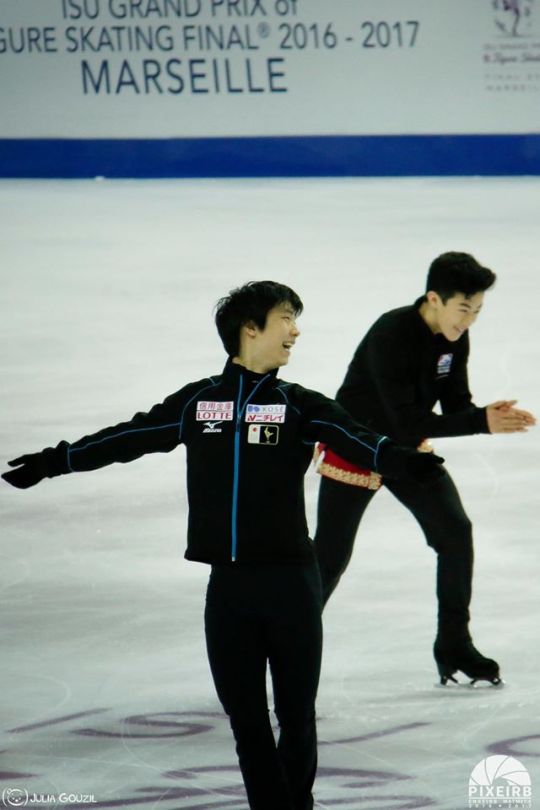 |
| Yuzuru having fun |
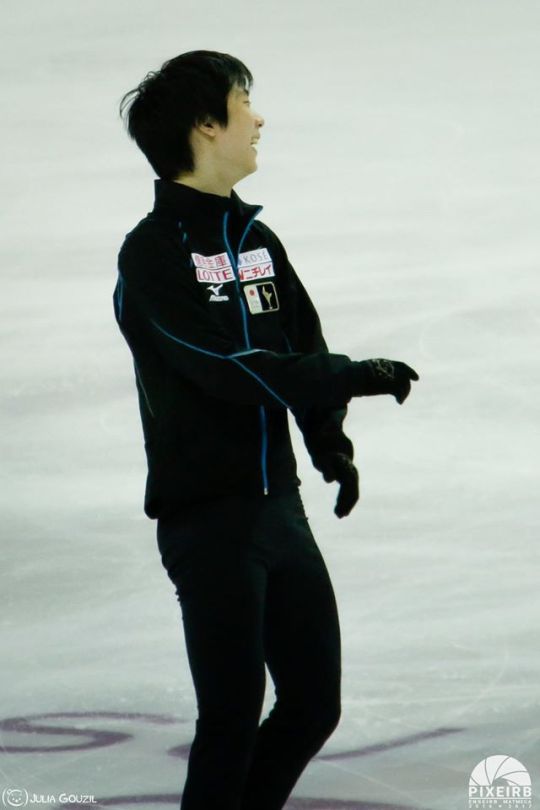
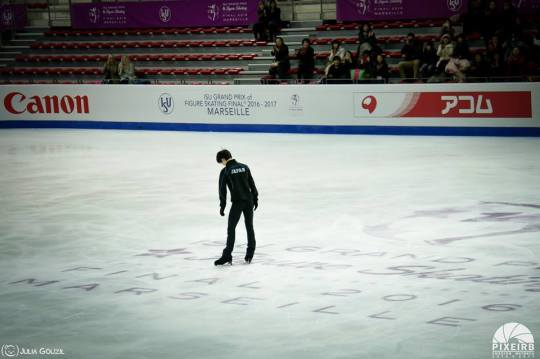

 |
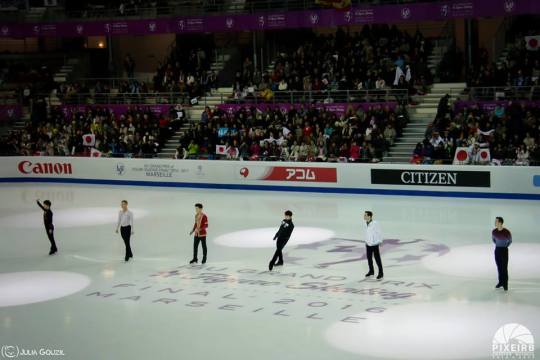
| Perfect group |
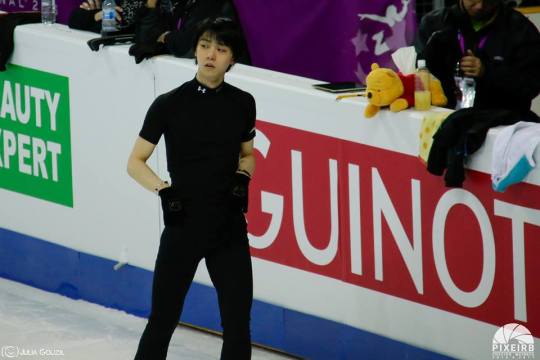
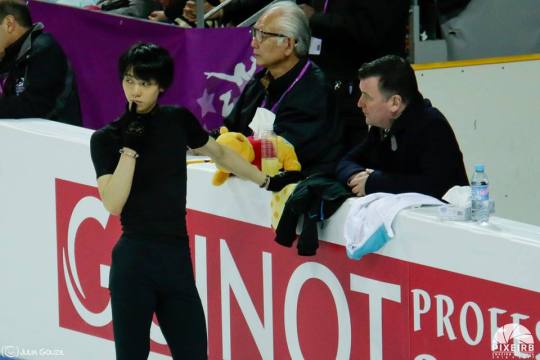
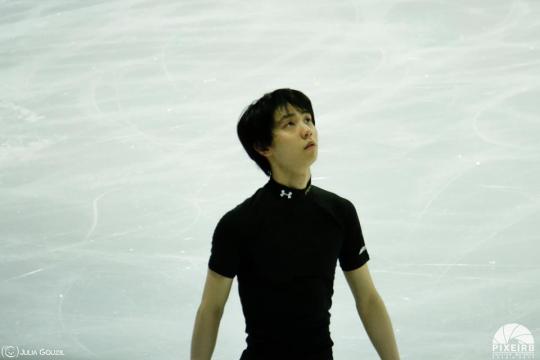
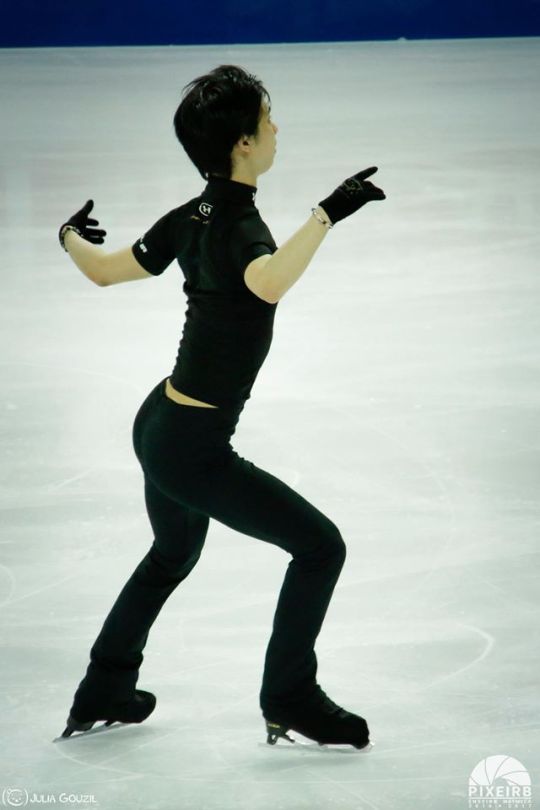
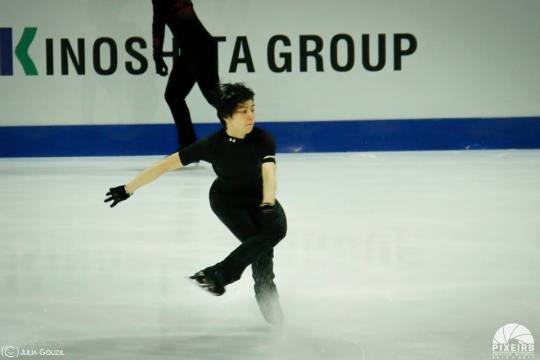
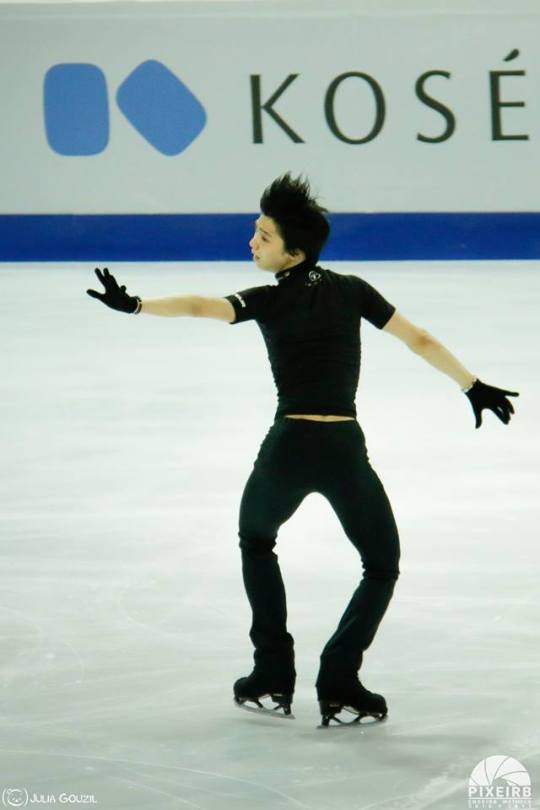
Source: Julia Gzl
Translate
.png "English")


Social Networks


