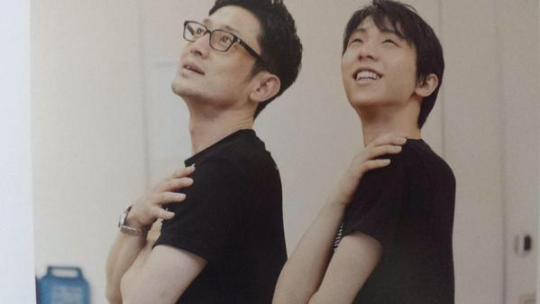
Mostrando postagens com marcador Kenji's Room. Mostrar todas as postagens

sábado, 3 de outubro de 2015

Kenji's Room - Episodio 5 - Tradução

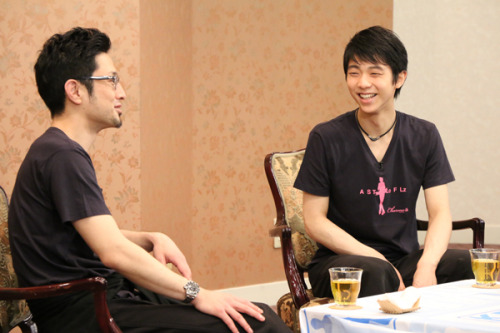
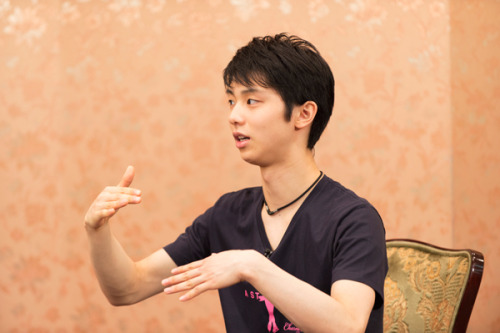
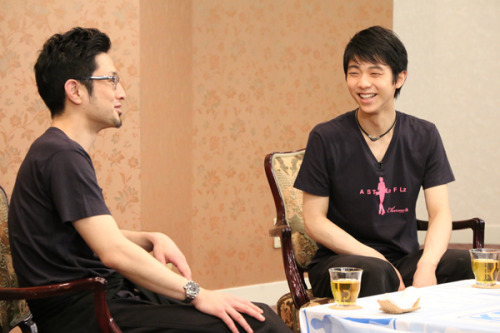
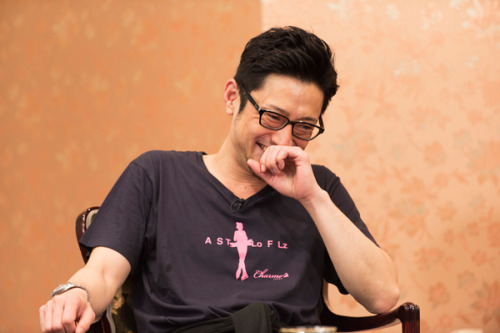
Kenji’s room with Yuzuru Hanyu - Episode 5

Translation by Yuzuland, thanks for helping Yuzuru fans who do not speak Japanese.

Tradução feita por Yuzuland, obrigada pela ajuda aos fãs de Yuzuru que não falam japonês.


2014 Worlds Championships

K: After (winning) Olympics, you also won Worlds Championship. How was it? Participating Worlds as the Olympics gold medalist. How did you feel when you went onto this theatre of your dream?
Y: Everything changed. I tried not to be too conscious about it but I did. I won gold medal in Olympics so I felt I couldn’t lose [at this competition]; and it was in Japan, so I felt like I have to win this.
K: So you were very concentrated then?
Y: On the contrary, I felt like I couldn’t concentrate. Because I was so aware of it. I only had mistakes in my short programme for 2 competitions during that season. Or was it 3? [I had mistakes in] Finlandia [trophy], first Grand Prix event Skate Canada and Worlds. I had clean short programmes for 5 competitions consecutively. But before the short programme at that competition [Worlds] I was nervous. Because it was the first competition I participated as the reigning Olympics gold medalist. The fact that I won the Olympics gold medal doesn’t mean Yuzuru Hanyu will change immediately. Yet I still thought I had to somehow change [something about myself]. [I thought] I had to win. Not “I want to win”, but “I have to win”. [That’s why] I was very nervous.

(VTR) Narration: In his first competition as Olympics gold medalist, he was placed 3rd after short programme.

Q: Please tell us about your thoughts.
Y: I’m full of regrets. I really regret [about this short]. I participated Worlds last season and the season before that. I only treat this as another competition [like I did before] and I think I have done sufficient practise for this competition. I just want to enjoy this competition from the bottom of my heart.

Narration: He performed exceptionally well for his free skating, which led to his come-from-behind victory.

Y: I had a few dangerous jumps so I was a bit scared. But I skated until the end, so I think it was nice, regarding that point.
Q: What are the parts that you paid most attention to before your performance?
Y: I was worried whether or not I could land the salchow in the beginning of the programme. And I missed my quad toe, which I am usually good at, in my short programme so that was the part that I wanted to fix and it also worried me. Although I took gold medals for the three major competitions, Olympics, Grand Prix Final and Worlds, each of these gold medals only represents my performance for that specific competition in this season. So I want to prepare for next season and practise to gain this gold medal again.

Narration: Yuzuru Hanyu overcame his pressure [as the Olympics gold medalist] and successfully won the gold medal for the 3 major competitions.
 
Q&A session

K: Here comes the Q&A corner. Draw one.
Y: I’m nervous. (K: It’s like drawing [your order for competition.]) Yeah. Best method for relaxing. So, Kenji-sensei, what’s your best method for relaxing?
K: Wait, not me (laugh). For me, it will be sleeping.
Y: I know. It’s getting repetitious but it’s going to be about earphones.
K: Let’s not talk about it…
Y: I really like listening to music.
K: I know (laugh bitterly)
Y: It may link to my obsession with music and choreography, but my best method for relaxation is to listen to music with a pair of good earphones or headphone and sometime I even lip-sync the song to get into the music.
K: Oh. So you do it in the subway…
Y: People will be scared if they see someone lip-syncing in the subway.
K: I sometime do that when I travel on subway. Ah, never mind. Ok next one.


When did you cry the most recently?

Y: Please keep this [previous] part. Got it. What did you cry the most about recently? I wonder when was it. (K: Did you cry recently?) I cried a lot when I got 2nd in Worlds. I think that’s it. What else did I cry for…(K: movie?) I am actually a cryer. Unexpectedly. I cry quite often. When I saw my score and got second place in Coc, I was so surprised and everyone cheered for me. And because of that I was able to skate and rotate all those jumps. I felt the power from the audience and I cried. Brian was sitting next to me and I felt his power too. Because he continued to support me as usual even in that situation. I just lost it and cried when I felt all those emotions. I think that was the time when I cried the most. I was just sobbing because I was regretful after placing 2nd in Worlds. But I actually cried in Kiss and Cry in Cup of China.

What’s your biggest failure in your life?

Y: What’s your biggest failure in your life?
K: Do you not really want to talk about it?
Y: I didn’t think anything as  my biggest failure.
K: Really?
Y: It’s not like that. [Biggest failure] means something that you wish you didn’t do, right? I don’t have any of that. Because I always think about it, I don’t always feel regret [about them]. But I do feel regret about things like “I could have landed that jump if I did this in the competition or show”. I don’t think my life will change because I did a certain thing. I think everything is fate. I just said something really cool (laugh).Ok next one.

What’s your favourite phrase? (your motto)

Y: Oh I got two [pieces of paper]. Which one do you prefer? left or right? (K: left) Favourite phrase? “Don’t forget what got you there in the first place”(初心忘れるべからず).
K: It sounds good.
Y: After I landed my first triple axel, coach [Nanami] Abe gave me my first iPod. It got “AAA’ carved on it, meaning triple axel. And she told me that phrase then. “Don’t forget what got you there in the first place.” Just because I landed triple axels and I landed quads, it doesn’t mean I should be too happy and full of myself. I should keep my feet on the ground and work hard. To me, that’s what it means. It stays as my motto until now.
K: Nanami sensei taught you an amazing phrase.
Y: I used to get lighthearted very easily back then.
K: I kinda get it from what I heard from you now.
Y: I used to think “I can win that, I can totally get that gold medal”. So I really cherish this phrase.
K: That’s good. Ok next one.

What’s your ideal male?

Y: I don’t know…I don’t really have any ideal [male figure]. In fact, I really don’t have any ideals. Regarding to figure skating, I have ideal, plans for my future, even though it’s not very specific. But I don’t have any ideal male figure. I think being natural and real is good. I believe that even if someone were to strive to become his/her ideals, he/she would face many obstacles and difficulties on the way. And I think one will be great as long as he/she overcomes all those obstacles.
K: Um, can you write down those words onto a memo and give it to me later?
Y: I’m just being honest.

What will you be doing in 10 years?


Y: What will I be doing in 10 years?
K: You will be 30 then.
Y: 30? I will be an old guy.
K: Hey! What did you just say? There’s a proper “old guy” sitting right next to you now!
Y: I said the wrong thing. This may be my biggest failure in my life.
K: Really? What will you be doing in 10 years?
Y: 10 years…I will still be a professional figure skater. I still want to jump 3A, in 10 years. But I think, in next 10 years, I will retire from competitive skating and join supporting activities. Then my life will have more depth and more weight. So I want to do a job that allows me to talk about the things I learnt or experienced in my life.
K: All the things you said are really inspiring.
Y: I’m answering it seriously. But I said ‘old guy’ when we talked about [what will I be doing in] 10 years.
K: But I listen to what you just said, and thought “I’m 36 but I didn’t do much stuff”.
Y: I think Kenji you express yourself through choreography in a programme.
K: Thank you. That’s good. [Y: Should I say more things like that?] Go ahead, say more stuff like that.

  
What’s your ideal female?

K: Your fans would love to know this.
Y: Ideal female…If I fell in love with someone then she will be my ideal female.Is [this answer] ok?
K: You…I will say that from now on.
Y: I really do think so. No matter what your ideal is, you can still fall in love with someone who is far from your ideal [female figure]. When girls talk about their ideal [guys], they always say “rich, handsome, tall and with masculine facial features*”
K: I’m not sure about the masculine features. I don’t hear that often.
Y: It may be because of my complex. Because my face isn’t that masculine so I have this complex. (K: Really?) We [Kenji and Yuzuru] are two extremes in the spectrum of masculinity in our features.
K: No,  listen to me, if I don’t have my beard, my face will not be too masculine.
Y: Really? But I don’t think so. You definitely look more masculine than I do. (K: No no, I am the refreshing type) (laugh)
K: OK move on. So your type is whoever you fall in love with.
Y: Yes. That’s what I think. Ok there’s two. i definitely got two [questions]. (K: Ok, let’s go with the one on the right)

What’s the best treat you’ve had?

Y: If I say this, it may be a bit embarrassing and I may get scolded for this…but the answer will be my mother’s cooking.
K: Oh aw
Y: Yeah I really think so. for example, it doesn’t have to be complicated. It’s not a treat because it is a fancy meal. My mother cares about my health every day. She cooks meals that will keep me energized, nutritious, and are easy to eat. Because I’m so not interested in food, so [she had to cook meals] that are easy for me to eat and flavours that I like to eat. She knows that the best. So I think the best treat is my mother’s cooking. (K: I understand) I will write that down on memo too.
K: I always tell people that you have to know clearly who you are grateful for. Next!
What would you do if you have a week off?

Y:What would you do if you have a week off? I’ll just be lazy and lie around.
 
K: Lie around?
Y: I will just stay at home and play games, go on internet, listen to music.
K: So you tend to stay indoor?
Y: I think I don’t always stay indoor when I was small.
K: Although I know you better when you are older, but I have the impression that you were very active when you were small.
Y: I think I’m not that “indoor-type” on the inside, but because I started figure skating very early, at 4, it would be weird to say this but I think ice rink is like my playground [, where I play]. I rarely play with friends at school; even though I always play dodgeball in the school during lunch breaks.
K: So you play dodgeball?
Y: I love it! (K: really?) Yeah.
K: So are you the type that stands in the front and dodges the ball like a hero?
Y: I think I was the type that was able to dodge the ball. (K: same here.) I can quickly dodge the ball that’s thrown from the outside and the ball would hit my friend. I just dodge the ball no matter what.
K: So you will stay at home if you have a week off.
Y: I think I would like to have some time alone. I think in one week, I will spend half of the time alone and the other half with my family. That will be my ideal way of spending my week off.
K: Those are basically things that you can’t do now.
Y: I guess so. Then I think I may go shopping or walk around the street on my own.
K: Ok, here’s the last one.
Y: Ok

What are you into lately?

Y: What am I into lately? Earphones! (laugh)
K: Earphones?


 Now come Kenji’s presents to Yuzuru!

K: Ok the first one is this. [A SONY headphone]
Y: 1A? Oh this is 10R! Oh my god this is great. Are you really giving it to me? (K: Of course) Really? (K: Yes Of course) The only SONY headphone I have is CD900ST. (K:*WTF*) That’s the name of the headphone, it is for studio monitor purpose. (K:*I have no freaking clue what he is talking about*) I have always wanted a SONY headphone, I am so happy.
K: Yeah, as long as you are happy with it. (Y: I’m super happy with it) I have no idea what you were talking about half way through.
Y: I think only the sound technicians know what I was talking about,
K: And this one. [A Hiroshima Carp uniform] (Y: No way.) I heard you are a fan of Hiroshima Carp (a baseball team). Please see this. (Y: Oh! This is incredible.) This has the signature of Kenta Maeda (pitcher of the team) on it.
Y: Ok Maeda pitcher will not come out from nowhere and surprise me, right?
K: We had someone who looked like MaeKen [nickname of Kenta Maeda] came over last time. Do you want to try it on? (Y: I’m so happy) It feels like we are signing a contract for joining the team.
Y: I love this. (K: Should we say the cost of this contract deal?) Like this? I don’t have a cap on. (K: Let me see the back. It’s good) It’s like this; holding the baseball.

Here’s a message for Kenta Maeda from excited Yuzu!
Y: I’m too excited and can’t really form words now. Please let me have a talk with you. I really..how should I say it… I really like baseball. Oh god I’m panicking now so I can’t talk properly. Maeda-san, your posture and your exercise allow me to enjoy baseball a lot. Thank you very much. I feel very reassuring and secure, knowing that you support me. Thank you very much. Please do you best.  Oh god I’m so nervous.


And we got a message from Kenta Maeda too!

Maeda: I’m glad and honoured that he is happy with the gift. He said he wants to have a talk with me in the video. I also want to have this talk if there’s a chance. He is one of the athletes that I have always paid attention to. Although it will be in front of a TV, I will cheer for you and I hope you can achieve great results. I will also work hard after getting inspirations from you.

Thank you, pitcher Maeda!

K: Please tell us your goals or aspirations for this season!
Y: I don’t have any goal or aspiration. I believe that I shouldn’t set a limit to myself, I won’t decide what I should do or what I want to do. I think I have to improve constantly and [because of that] I will desire for different things over time. For now, I desire for skating [skill] or strength. But by the time the season starts, I may wish for the ability to express myself, or interpretation of the music or spins. So I will always think what’s essential and what’s needed and what aspects should I improve.
K: I think these are amazing thoughts. Thank you for to day. (Y: Thank you.) Everyone is cheering for you. Please take care of your body and don’t get injured. (Y: Thank you) Thank you for coming to this show even though you are so busy.
Y: Thank you so much for the gift.
K: Then I will see you. (Y: see you) Take care.

Thank you, Hanyu-senshuu for your talk! We look forward to your performance.

Interview with Yuzu after the talk

Y: I think I was able to honestly talk about all my thoughts with Kenji-sensei.
Q: Your Impression of Kenji
Y: He is really kind. I think he is very sensitive in terms of sensing others’ feelings and he really understands my feelings. He is a very kind person.
Q: How was Kenji’s room?
Y: I haven’t had a chance to have such a long talk, although it’s in a form of a studio recording. I’m glad that I had the chance to talk about topics other than figure skating in such a relaxed environment. I think I might have shown a different aspects of myself.

Interview with Kenji after the talk

K: It really feels like a normal conversation. It was fun. I think it is great that we can hear about his thoughts and some deep topics. I think that’s really good.
Q: Did your impression of Hanyu change [after this talk]?
K: No, not at all. That’s how he’s like usually. Oh actually it may have changed. It’s not always possible to have such in-depth conversation about skating while we are choreographing. So I learnt that he actually thinks about a lot of things when he skates.
Q: Which part left the deepest impression?
K: They were all good conversations. For example when he said he doesn’t set a goal for himself. I think that’s really deep. But the bad part is when he said 30 years old is an old guy…that’s a bit…that’s the only bad bit. But there are many conversations that left a deep impression. It’s rare that he talks about Olympics. I’m glad that I got to hear so much from him. I hope we can invite more skaters to come on this show and discover more about them and make fans want to support them even more. I hope to make this talk show to be able to do that.

Video of this talk can be viewed here.

Read more: JSPORT


 Source photos:
Yuzuland.tumblr
kirariyuzu.tumblr
@jsports_figure 

domingo, 27 de setembro de 2015

Kenji's Room - Episodio 4 - Tradução

Kenji’s room with Yuzuru Hanyu - Episode 4

Translation by Yuzuland, thanks for helping Yuzuru fans who do not speak Japanese.

Tradução feita por Yuzuland, obrigada pela ajuda aos fãs de Yuzuru que não falam japonês.


Big improvement in 2012/13 Season
K: After you changed your coach to Brian Orser, you had many competitions. You participated Four Continents and won Japan Nationals first time. And then it is grand prix.
Y: I changed [my coach] to Brian in the year of 2012 Grand Prix. In the first event of Grand Prix, I marked the world record [at the time] for short programme (95.07 at GP Skate Canada and 95.32 at NHK Trophy) and that made me famous.
K: You were quite famous already.
Y: That was a surprise for me too. It was shocking. The jumps in my short programme might have been perfect but many other aspects of the programme were not. With that performance that I wasn’t satisfy with, I felt like “90? eh? 95?? Should’t it be 85?” It was quite surprising. At that time, Patrick would get 92 or 93 when he has a clean programme. So 90 points is like another dimension. So I was surprised that I got [that mark].
K: But you got it.
Y: Yeah I got that mark. But the free was horrible though.
K: Opposite from how you were [in previous seasons].
Y: Yes. From that season, the pattern became “having a good short and a horrible free”.
K: But the best short programme performance was the last exhibition of the last competition, right?
Y: Yeah. I had my first clean programme in exhibition. In that season, I didn’t have a clean performance other than exhibition performances.
K: (laugh)
Y: The free in Grand Prix Final was almost clean. But I was so tired before the lutz, I didn’t think I could jump it.

Base Value
K: How do you maintain your motivation when you feel like you cannot land the jumps.
Y: I will be like I’m gonna jump anyway. I will take the base value of the jumps anyway.
K: It is important to have those base values points.
Y: After the accident in Cup of China, I thought I cannot pop any jump so I had to rotate all the jumps anyway. I thought I could fall on those jumps. I have to rotate all those jumps even if I’m gonna fall on them. I don’t care about the -3 [GOE] or the deduction, because with the -3 and the deduction, it will only be -4. If I can rotate a quad salchow, which has a base value of 10. something 10.5], then I can get around 6. So I just had to keep on rotating all those jumps.
K: Base value is important.
Y: Yes it is important.


2014 Cup of China, the accident during 6 minutes warm up
K: I don’t know if I should ask it, but were you fine when you collide [with Han Yan]?
Y: I wasnt fine after the collision. People always asked me “were you fine [at CoC]?” my response was “if I was fine, then I would have skate properly.” I couldn’t move my legs at all so I had to leave with a wheel chair. I am also amazed by how I could rotate all those quads and skate for 4 and half minutes.
K: Maybe you thought of the base values in the back of your mind.
H: (laugh). I did actually think about the base value. [I thought] if I rotate the jumps then I can get the points so I have to rotate as many jumps as possible. I thought I would nail at least axel.


2014 Cup of China the situation after the collision
K: (point to Hanyu’s chin) There?
Y: I bled mostly from here. This wound was the biggest and bled a lot from here. And this side [of my head]? this side or that side, I forgot, also bled. Maybe I hurt the side of my head when I collided with the skater Han Yan, I don’t know.
K: The amount of blood was scary. But that’s it?
Y: Yes. I didn’t cut the back of my head. My chin was hit by the ice. But that’s it. And the wound in my head was just because of the collision.
K: So your head was fine [as in you don’t have a concussion]?
Y: I didn’t feel like my brain was shaking. I thin I felt my brain shaking a few times before.
K: What?
Y: When I was small, after I got onto the podium in a novice competition, I thought I could go to olympics [and jump 3A] and I was like “I could jump and land everything”. So I went to practise 3A even though I couldn’t land a perfect single triple back then. So I thought I could just delayed* my 2A…
K: Delayed?
Y: When you open up and then go back to a tight position..do you know? Split [the jump]? When I tried to do my 3A, I landed on my ankle and my head hit the ground and I wasn’t conscious after that. Sometime after that I was moved to a warm room and I couldn’t move my arms and legs.


2014 Cup of China the truth behind that collision

K: Take care. so when you had the collision in CoC…
Y: My head was fine. Right before the collision I was doing a three turn, forward facing with my left foot. So [when we collided], my left foot was turning to the back and the other skater’s knee just came straight [to my inner thigh]. I was skating with my left foot but my left foot also left the ground. But my right foot wasn’t touching the ground either so I thought “Ah what should I do” while I’m in the air. My head hurt and I thought “oh crap” and I landed on my stomach. I landed on my stomach so my stomach hurt a lot. Every skater must have experienced this. (K: Can I guess? [You fell on your stomach when you were practicing] Flying camel [spin]?) Ah no…Sometime you fall on the front when your toe is caught by the ice. (K: No matter how good a skater you are) Everyone must have experienced when they were small.  So when it is with the fastest speed and you collide, your stomach hurts so much that you can’t breathe. [The collision in CoC] was like that but 20 times.


K: I can’t imagine that! You couldn’t even move [after the collision].
Y: At first, I was still conscious so I tried to stand up. But when I tried to stand up, my stomach hurt so much and my muscles were contracting so I couldn’t lift up my back and I had to bend down. But that position was very painful so I had to lie down. I remember myself thinking “can they blow the referee’s whistle, ah everyone is practicing but it hurts”. Then the Chinese medical team came over and brought a stretcher over. They asked me if I was fine and if I could walk. I told them “I’m fine, I don’t need that [stretch]. I can just leave [the rink] normally.”
K: It’s good that you didn’t hit your head.
Y: I’m glad that it isn’t my head. Although I had bleeding from here [chin] to here [the side of his head], I didn’t have much blood coming out from the head. It was the bleeding from the chin that was quite serious.
K: It was good that it wasn’t your head. It could have been a concussion.
Y: I didn’t have a concussion. An American doctor came immediately afterward to treat my wound. Brian was worried about me so he was talking to the doctor in English. They asked me in English, what is 100 minus 7, wait it was harder than that, something like 100 minus 7 and then minus 7. And it was after all the panic and I hit my head and my chin, so they had to check I don’t have a concussion. But they asked me such a hard question and I had to answer in English so I was like “huh huh???”
K: It is difficult even in an everyday life.
Y: So I remember that really well. I was like “I can’t answer that.” But I was conscious so I told them I’m fine. My eyes were fine too. I bled a lot and my chin swelled up because of the wound. But my knees and thighs hurt so bad.

Sit spin was the most painful part of the programme
K: So you hurt your muscle [after your collision]
Y: It felt like my muscle was taken from me. It was like the pain when you pulled your muscle. Here [the thighs] is the most painful part because you have to use that muscle for everything. Sit spin was more [difficult and] hellish than the jumps.
K: (laugh)
Y: I was quite conscious during that competition.
K: Yeah. Sit spin seems to hurt a lot, especially when your thighs hurt.
Y: You always have to endure [the pain when you do] the sit spin. When it is jump, it was like a quick deal.
K: So when you land, it is your right leg.
Y: Sit spin was hell. So from what I remember, I fell on the salchow, I fell on the toe loop, I landed the flip and then I went into the combination jump. Then I remember thinking “I don’t want to do the sit spin, can I still stand after the sit spin.”
K: Like you’d sit after your sit spin.
Y: It is like sitting after my sit spin.
K: I wasn’t aiming to be funny.
K+Y: (laugh bitterly)
K: Can I just talk about this for a bit?
Y: Go ahead.
K: I was doing a sit spin when I was choreographing one time. I was spinning quite fast and when I tried to stand up, I strained my back. (Y: (laugh)) It was about 3 years ago. I was in [half sit half stand up] position and I couldn’t move so I just sat down as the spin slowed down.
Y: How did you stand up in the end?
K: Tomo-kun came over and helped me. And we went to hospital after that and it was okay. I only said that [joke] because I remember this incident. I wasn’t aiming to be funny.
Y: But the story you just told…wasn’t that funny. The reaction [of the staff] is “…” [no reaction]. (K: here you come with you witty comment [tsukkomi]) I was laughing so hard just now because I could imagine how it would look like, I know because you choreographed for me before. But the staff don’t about that…so the reaction is…[inexistent].

Do you have any elements that you are not good at?


Y: …Lutz? I’m actually not that bad at jumping lutz.
K: I know.
Y: I’m no that horrible at lutz, even though I gave the impression that I’m bad at it. I was very bad with the jumps (a long long time ago :P)
K: All of the jumps?
Y: All of them. I suck at all the jumps. But I like axels so I practised axels all the time. But I couldn’t land those jumps, but people around me could.
K: You hate to lose right?
Y: Yeah. I was aware that I was bad at jumps. Although it’s not elements but when it was Worlds junior, I suck at short programme, even though I’m good at free. But after I got Parisienne walkway, I became good at short but bad at free.
K: Keep on eliminating [your weaknesses].
Y: If I improve on something, I will start to think I suck at the other aspects that I have yet to improve on.  Basically it’s not like I cannot do something. But sometime I do get a bit clumsy and not so good at it.
K: Do you look at other skaters when you practise?
Y: I look at them a lot. I stare at them. I won’t look right before my performance during a competition. But during other time, like practise time, then I will look at them.
K: What do you look for when you observe them?
Y: How they jump. (K: So you analyze how they jump?) Yes and also the movement of their hands. I didn’t study dance so I learn a lot from the way they use their hands and the music, for example from Jeff in his choreography video.


Ideal figure skating


K: After seeing different skaters, What is your ideal figure skating like?
Y: My ideal figure skating is…figure skating has both jumps and spin, which are the athletic part [of the sport] and the skating skill, expression, steps, which are like ballet, artistic part of the sport.
I want my programme to be a figure skating programme, not entirely artistic [or entirely athletic]. You would know ‘cause I have said that to you before, but whenever people choreographs for me, I always tell them “I want to express spins and everything”. Also, I want to match with the songs. I feel disgusting if I don’t. For example, the timing of the jump or the timing before I go into a jump. I want those to be in the music or in the content of the programme. I always pay attention to not separate skating from expression.
K: Oh yeah, like the beginning of your last season’s short [Ballade no.1]
Y: Yes (laugh). Jeff wanted me to close my eyes but I was so nervous at first so I couldn’t close my eye because my eyes kept moving. So I  [*stare at the ground*]. And I could also do my imagine training then. During that time I just think about the [quad] toe loop. Something like I can land if I jump like this.
K: After watching that, I said it is better to close your eye.
Y: And I started to close my eyes after that. I closed my eyes during my practise too.
K: I was worried about [you opening the eyes during that time], it suits the music better if you close your eyes. Jeff must have spent a long time planning that beginning, is it 15, 16 seconds?
Y: Um 17…at least 15, 16 seconds.
K: It is hard to close your eyes that entire time, right? I shouldn’t have told you that [you should close your eyes]. I was worried that you won’t be able to orientate after shutting your eyes for so long. But if you also do it in practise then it’s fine.
Y: Yes. I thought that would be the case. When I’m not in my good condition, I only have horrible image [during my imagine training] when I’m in a competition. So I “input” [the image of] how I jump and land at a specific timing in the music into my brain. When the music starts playing only that image will be in my mind. With the same length.
K: Oh.
Y: Everything is in sync with every note of the music. For example, I will do a cross over from this part to that part [of the music], and then I will do an eagle, then a choctaw, then go into a toe loop. Every single movement, although it’s not choreography moves, it is in sync with the music.
K: So you stand there, close your eyes and imagine. What if you screw up in your imagination?
Y: I practiced not to have that [situation]. Practise for imagine training.

Imagine training is like choreography


K: Imagine training** is fun.
Y: Imagine training is part of the performance [in the competition], it’s like choreography. [You are thinking] “cross over at this point and make an eagle”. It’s just that you are not moving your body. I imprint [the imagination of] my body moving at a certain timing of the programme onto my mind.
K: You imprint it onto your mind. That programme is really cool.
Y: I also like it very much.
K: The emotion varies over the duration of the programme.
Y: Because it is a classic. I told you when you were choreographing for me, but classic doesn’t have lyrics and background to it [so it is not restricted by lyrics or background]. It allows you to fully express your emotional the time, nerves, and your true self.
K: I’m choreographing a new programme. I’m listening to the music and I find it interesting that the music seems to just choreographs itself. You pay a lot of attention to every element, like you want to do this with your spin.
Y: I think this starts when Kenji, you choreographed Hana ni Nare for me. I wanted to end the programme with a spin that I’m good at, but you said [that spin] closes into itself, it is not blossoming. (K: Did I say that?) Yes, and you said “that would be a bud. Open your arms at the climax in the end” For example, with the pancake [spin], I remember you told me that “this would be very small, you have to make it bigger”. After that, I realised that I shouldn’t just do the moves that I’m good at; I should follow the music and choreographs according to it.
K: Oh I don’t know why but thank you for complimenting me.

Yuzuru Hanyu’s strength, according to Kenji
K:  When was this… I thought you were really good when you were doing your skating practise. If I told you to pay attention to this bit and that bit, you would just keep on practising. The rink was quite cold but you came over sweating and said “I have worked on it for a bit, what do you think?” And you actually fixed the priblem. And if I told you it’s not enough, then you will keep on practicing. After that you would come over and tell me you’ve worked on it and ask for my opinion. This just keeps on going, as long as I say there’s something to improve on.
Y: You can’t stop after you started to pay attention to one bit [of the programme]. I want it to be complete. It is not like it’s OK if you just pay attention to it. Same for jumps, it is not only about landing the jumps. But also how to jump beautifully and how to jump without using a lot of energy. I’m very fussy about this. I think I’m more fussy about skating than most people. It’s not specific to expression, step, jump or spin individually. I’m fussy about all of those elements.
K: Speaking of things that you are fussy about, then we can talk about it a long time
Y: I think we can talk for a long time (K: Nevermind then.) I can start from warm up.
K: I can also talk about warm up, like I want to warm up by doing some sports…let’s stop here.
Y: Let’s stop here.

*Thank you for telling me it is “delayed”! :)
** Direct translation would be “image training” but I thught imagine training would be more descriptive… :D Thank you yuzusorbet for pointing it out :)))


Algumas fotos tirados do vídeo:   


Foram  bem interessantes as perguntas de Kenji sobre a colisão de Yuzuru,  esclareceu muitas dúvidas que o público tinha sobre esse acidente.
Eu tremo cada vez que vejo imagens desse episódio e depois de ver Yuzuru descrever o que ocorreu só tenho a agradecer por ele sair ileso.
Tenho certeza que todos admiradores de Yuzuru  torcem para que ele se de bem nessa temporada, mas principalmente rezam para que ele não sofra nenhuma contusão e/ou acidente como na temporada passada.

Video of this talk can be viewed here.

Read more: JSPORT


Tradução feita por Yuzuland, obrigada pela ajuda aos fãs de Yuzuru que não falam japonês. - See more at: http://yuzuruhanyubr.blogspot.com.br/search?updated-max=2015-09-22T00%3A01%3A00-03%3A00&max-results=3#PageNo=2

domingo, 20 de setembro de 2015

Kenji's Room - Episodio 3 - Tradução

Translation by Yuzuland, thanks for helping Yuzuru fans who do not speak Japanese.

Tradução feita por Yuzuland, obrigada pela ajuda aos fãs de Yuzuru que não falam japonês.

 (15/09/15)
~Tohoku Earthquake~

K: Um…there was [Tohoku] earthquake, which was terrible… I don’t have the right to talk about it but it would be nice if we can talk about how that experience affected you, or your feelings and thoughts about it.

Y: Because of the earthquake…I don’t really want to use words that have positive connotation, like“opportunity”, [to describe the earthquake]. But if we ignore the positive or negative connotations, I will use the word “opportunity”; because of this earthquake, I felt more strongly about expressing my emotions*. On top of that, [it made me to consider] my feelings towards figure skating, the meaning of skating. And it is not only restricted to figure skating, but also my own identity as Yuzuru Hanyu. There were many identities to the name Yuzuru Hanyu: the usual Yuzuru Hanyu and the skater Yuzuru Hanyu, and there were many people who treated me as the symbol of the areas that were affected by the earthquake (Tohoku), so there is also Yuzuru Hanyu, who is the symbol of Tohoku. I struggled to decide the Yuzuru Hanyu that I should identify with. Although we were at a different perspective and situation, but Kenji, when you choreographed for me…you also experienced earthquake, and I think there are some feelings that are the same [for both of us]. [We share] the feeling of helplessness, inability of accomplishing anything on your own; this kind of sadness, pain, helplessness.

K: At that time, we did the programme “Hana Ni Nare”. Althought it was choreographed, but the singing, and the movement of the hands…were really good.

Y: That was probably the first time I skated to a Japanese song. It was also the first time Kenji choreographed for me. The reason why I keep skating to that programme is because I was saved by that song, even though it was made before the earthquake. When I was thinking about the meaning behind the lyrics, I thought I could relate my painful experience to it and express it [in the programme]. But i think by showing how I overcame this terrible experience, the audience can relate the lyrics to themselves, or to others. I still cherish and enjoy skating to this programme.

K: I am about to cry so let’s not talk about this anymore.

K: After [the earthquake], you have been performing very well. What did you feel when you participate  competitions back then?

Y: At first, I didn’t want to [particpate]. I wasn’t exactly the representative of Tohoku, but Sendai also suffered from the damage brought by the tsunami and the nuclear power plant. So I was feeling like “I was merely skating because I enjoy it, why do I have to carry the burden [of representing the areas that were suffering because of the earthquake]. But meanwhile, I also felt that “I am the only one who can do this”. So at first, I said “I am not a representative of Tohoku, I will participate the competitions, as a Japanese skater, as Yuzuru Hanyu. But after several competitions, I received many letters and I realized that I want to perform better if someone can be happy when they see people like me, who’re from Tohoku, work hard. That’s what I felt when I was competing and I read the letters from people back in Tohoku and the entire nation. I was supported by all these encouragements.

It continued until Olympics; I was just doing what I love to do, trying to win and have better scores, but I could feel the enormous support from everyone. I think it is most important to accomplish something for someone else. For example, even if someone sends me a letter of encouragement, I am not getting better just because of the amount of letters I receive. Yet, I feel like everyone’s feeling is connected as one via myself. There are people who struggles because of the tsunami, the nuclear power plant, or cannot go back home because their houses were destroyed by the earthquake. These people and people from west Japan, Tohoku, east Japan can be connected through me. I am so happy about this then, and now and when I took the Olympics gold medal.

K: When you first came and skated in Kobe, everyone cried and thought it was great.

Y:I remember Kenji was having a really painful expression. I did “White Legend” and I still remember it clearly. That is my motivation to skate.

K: I think it was fantastic.

Y: I think I cannot skate like that anymore in my life. I could only express like that with my feelings back then. It was an expression of trying to fly away from darkness, that performance was special to me too. If I was not invited to Kobe, I must be still thinking “should I be skating” when I skate. I’m glad you invited me to Kobe, sincerely.

K: Thank you.

Y: Not at all, I should be saying that.

~ World Championship 2012~


K: Your first world championship, you placed third. How was it?

Y: To me, worlds is a very special place, it was the stage of my dream, where all the skaters who I admire since I was young competed at. And to be on the podium in that competition, it was almost like a dream come true. I remember being very happy.

K: So it was like “Kya—!!”

Y: It was “Kya—!!”. But the short programme was horrible. I was placed 7th after short and wasn’t in the final group. It became quad-double jump and the triple axel was not good and I popped the lutz. I thought “lutz again.” I am horrible at short.

K: Why is that? Are you nervous?
Y: I don’t know, I think it would be easier to skate short. I am bad at short.
K: It’s that, we talked about it before. You think too much.

Y: It is common for me to think too much. But, I think I have to maintain a nice balance between feeling, rhythm and theory in order to have a good performance. If the ratio is 1:1:1, it would be disastrous if the ratio becomes 1:2:0.5.

K: Okay. And you went to Canada then?
Y: I changed my training base to Canada after 3rd place in Worlds.
K: and receive training from Brian?
Y: Yes.

K: It is not related but Brian taught me how to jump Axel when I was in high school.
Y: Axel?
K: Maybe it wasn’t axel.
Y: You were a single skater.
K: Yes I was.

K: You went to Toronto, Cricket right?
Y: Yes, Cricket club.
K: The nacho from the place under Cricket club is very good, right?
Y: I haven’t tried it yet. Under [cricket club]?
K: I don’t know if it is still there. I think the building is still the same. There is a huge grass field right?
Y: Yes, a cricket playground.
K: Oh, a cricket ground…I always play Frisbee there.
Y: Frisbee?
K: Yeah, eating nachos and playing Frisbee. Of course I did practise too.

Y: [Cricket] is a really good training environment. In Canada, especially Cricket club, training clubs really base everything for the need of the skaters. It is exclusive to members, there are tennis courts, gym, pools, cricket ground. It’s a very sophisticated facility. My younger self wouldn’t even imagine myself training in such a nice environment. My home rink was closed once…no twice. Before I moved to Katsuyama, I was training in the rink in Izumi. You know Izumi, right? (K: Yes). That rink in Izumi closed because of financial problem. Then I moved to Katsuyama, but Arakawa reopened it after she earned gold medal in Torino. She asked for it in the press conference in Torino. With the help from the government, the rink was reopened. But after the earthquake, it was closed again. So I understand how precious it is to have a good training environment. So, an environment, like cricket, allows me to concentrate on my training, do my warm-up as the way I want, cool down and pretty much everything. Now I know how important training environment is.

K: So you don’t play Frisbee there?
Y: No I don’t play Frisbee.

K: But why did you choose Brian Orser to be your coach?

Y: Training environment was quite a big deciding factor. Instead of saying I chose Brian… I usually perform really well in practise, ice show or official practise. For example, I landed my first quad in a practise for an ice show. I land all my first quads in practise, not in supervision of Brian or any coach. Same for my triple axel, which I landed in the training camp. So I wanted to be in an environment where there are good rivals. So I decided that I want to train with Javier Fernandez, who really improved a lot that year and his jumps stabilized after he moved to Cricket, so I thought I will improve if I go there [and train along side with him].

K: ‘cause you hate to lose
Y: Yes, I hate to lose even in ice shows.
K: Yeah you hate to lose so much. Javier and Nam are practicing with you there. Do you have any funny story?

Y: Um…Javi and Nam sometimes do something and play around for a bit, and I just observe and continue on my training.We don’t compete against each other, well it may not be funny but, every time Javi skates a clean free programme in practise, I am not in my best condition, I will pop all my jumps in my free. It always happen, [it’s bad] to the extent that people will think whether I’m putting in any effort at all. In those times, Javi, instead of my coach, will come and cheer me up. It happens the other way too; if Javi is having a bad day and I have a good day, I or Nam will go and cheer him up, like “it will be fine”, “you were able to land that jump the other day”.

K: So it’s a friendly rivalry (Y: and friends) and you [improve as you challenge each other]. Do you have any other skaters you are particularly close to?
Y: Yes, I don’t think you will know them by names. (K: I think I will know) I don’t think you will. (K: Say it.) I don’t think you will know. (K: So you don’t want to say the name?) No, not that I don’t want to say the name. (K: Who? I have been to Cricket club) It’s a different generation. (K: Who?) Maybe I don’t have any skaters that I am close to. In Cricket, I am not the talkative and enthusiatic type. (K: you are when you are in Japan though) In Japan, I will be like that because I don’t train here.

K: Oh because you have to concentrate [in Cricket].
Y: Yeah. The difference between my personality when I’m serious on skating and when I’m not is very big.

K: Oh I understand. Sometimes, I would tell you to practise for a bit [while I choreograph] and when I want you to come back, it is hard to talk to you [because you are so focused.]
Y: Yeah because I was so focused. My mood when I am focused on skating and when I am joking around with friends or when I am having fun with Nobunari-kun is completely different.

K: In the bus, you and Nobu are always having fun.

Y: Mainly, it’s Nobu who is having fun (K: No that’s not true.) Recently, my tsukkomi skill is getting better. When Nobu is being silly (boke) or doing something that allows people to give him a comeback (tsukkomi) on. (K: so you just had to say it) Yes so I did. I can’t stop myself from saying those comeback comments (tsukkomi).

K: Really? Next time, invite me as well. (Y: I think you pretty much joined us already) I did?

Y: But sometimes you are like “I have had enough”

K: I never. But the bus rides are really fun. (Y: Yeah) Brian…Orser-san. I tend to just call him Brian. (Y: Brian is fine. That’s how I call him.) You changed your coach to Brian and after that you improved a lot. You won Japan Nationals for the first time. And then Grand Prix.
Y: That year (2013), after I changed my coach to Brian, in my first Grand Prix event, I marked the world record for short programme and that made me famous. (K: You were quite famous already.) That was a surprise to me too. The jumps were perfect but many other aspects of the programme were not. I got 95 with a performance that I was not satisfied with. I thought “95? Shouldn’t it be 85?”

*direct translation: The earthquake was an opportunity for me to broaden the upper limit and the lower limit of my feelings towards expressing my emotions.

**Tsukkomi and boke: the way many comedians in Japan say their jokes. Boke will do or say something silly and Tsukkomi will say a funny comment to makes fun of the boke


Source photos: yuzuland.tumblr
                      @violet_bird0214
                       @jsports_figure

Read more: JSPORT , JSPORT

Video of this talk can be viewed here.

quinta-feira, 10 de setembro de 2015

Kenji's Room - Episodio 2 - Tradução

 Tradução feita por Hamaguri do forúm Golden Skate, obrigada mais uma vez.
Tradução feita por Hamaguri do forúm Golden Skate, obrigada mais uma vez. - See more at: http://yuzuruhanyubr.blogspot.com.br/2015/09/kenjis-room-episodio-1-traducao-ii.html#sthash.0T98OiNv.dpuf


Kenji’s Room Part II (15/09/08)

3:25-
(k)When is the first time you’ve landed 2A?
(y) I was in the 3rd -4th year in my elementary school days (9 or 10 years old). When I went to my first novice competition, it was crucial to get 2A. So I paid attention to 2A very much. Further, my coach Tuzuki-sensei, called king of Jump, strongly emphasized the importance of 2A. So I spend three forths of my practice time on 2A.
(y)It seems I got 1A in much shorter period. I don’t remember when though, people around me say that.
(y) I admit my Axel is unusual. I like axel best. Axel has something special…

(y) I landed 2A for the first time watching my sister doing. I couldn’t make it for some time, although it seems shorter than others. My thought at that time was like I shall get the jump which my sister got….
(y) The case is the same with 3A. Mao Asada-san came to National team training camp. She was so thin (and didn’t seem to have so much muscle). Much muscle force didn’t seem necessary. It felt like I could get 3A that way.
(k)You got it at 2nd or 3rd challenge?
(y) I made it at the 3rd time provably. I did step-out at the 2nd time, so I was sure I could… Finally, I could make it.

(y) But after that, I had a long period I could not get 3A. About for one year, I didn’t make it at the competitions.

7:25-
The story about Kenji-sensei’s 3A continues. He was once a single skater. He couldn’t get 3A, so he tried 4T. During the practice of 4T, he hit against the wall, so he gave up. He had the fear about 3A. Then the story moves to the episode at the ice show, he tried 1A and finally got it.

9:35-
(k)Are you trying any new jump?
(y) I happened to land 4lz only once. I nailed it. But after that I hardly practiced about it. I had some competitions. The success ratio of 3lz-3t was too low. My first priority should be 3lz-3t.
(y) Further, my timing of jumps differs depending on music. I rather listen to music. For example, Ballade was triple measure, and has the wide range from slow to fast parts. That was why I failed to get suitable timing at jumps, which made it difficult to make it.

(y)4lz and 3lz are much different. Further, about something along the line of that, I can’t get 2A now. Actually, 3T is difficult very much. I have few chances to do 3T. In my case, 4T comes after 2T. I’m not good at 3T. One day, I had to do 2A at the ice show, I was about to fall forward several times… I have little sense of 2A.

11:50-
They laughed at his struggle with 2A doing funny gesture.


12:15-
(k)About Shizuka-chan. She was in the same rink as you. How did she behave towards you?
(y)I only watched her. Actually, we had few chances to practice with the rink mate who was at the different level. Yamato-san cared me more.

13:20-
Then, the episode that Yamato-san once got into Kenji’s Room suddenly (film at a restaurant, with Daisuke-san)

14:00-
(y) “Yamato-sensei sometimes spoke to me, like while I got massage. I have no memories that Arakawa-san or Honda-san spoke to me. Of course, there may have been, but I don’t remember since I was too young at that time. But I remember Yamato-san spoke to me or tried to kind of interfere with me… The expression “interfere” is not suitable. “Spoke to me” is the best. (lol)

(k)You were famous when you were still novice. And then, you won at Junior WC2010.
(y)My Junior WC2010 fell on my graduation ceremony at Junior high school. I got my graduation ceremony only for me on another day. The venue was set up for the ceremony and I was there alone. I was going to be alone all the time, but when I got back to my classroom, my friends, who I like most, rushed around me, “welcome back, yuzuru!” I was happy very much. That’s the most impressive event through my school days. Many memories lay in my 3rd Junior high school student days.
* graduation of Junior high school (English Sub.) 

16:40-
(k)The trouble when you were junior skater.
(y)At my first Junior WC2009, I took only 13th place. I went there alone, aiming for getting more spots (for Japan). But I failed. It was tough experience. 


(k)Did you get angry with yourself?
(y)I rather got angry with myself. My practice time was initially short. But I gained it towards the Junior WC, then, I got trouble with my back for the first time and lost even 1A 1 week before. I couldn’t even get up. In the middle of that I had to compete at Junior WC. It was so regrettable that I’d got into such a state of body and I couldn’t get my performance at all.

(y)The experiences at that time were useful to me. At that time, I made some excuses, like “I had a backpain.”, “I had a sprain.” I thought those inside my heart as well as I said those to people around me.. From the experiences, I learned that I shall never make an excuse.

(y)Great skaters rarely make excuses, like injury, rink.. Those are pointless and some skaters can make it in any circumstances. For example, Asada-sensyu got skating with her bone broken. She never conveyed that to media.

(k)When you won at 2010 Junior WC.
(y)I got much practice after the fail at previous year’s Junior WC (2009). The Junior WC(2010) was in the Olympic season, and some Senior skaters came to Junior WC to get more points. I wanted to defeat the Senior level skaters. At that time, Denis Ten competed in Senior WC. I wanted to beat such a skater. I remember that I tried Junior WC with that thought.
(y)At that time, I didn’t mind the spots of Junior WC for Japan. That season I never lost at Junior competitions including JGS. Still, I could not bring good performances in both SP and FP. I was not good at SP. In many cases I failed at SP and nailed at FP. At the Junior WC as well, I took 3rd place at SP, and took 1st at FP landing 3A. It was my winning pattern.
(y)At that competition, it felt like I was not so conscious of the Junior WC. It was like SP at the Olympic. The feeling was like “However big the competition is, it is just one competition and I’m OK since I’ve won until now”
(k)You got enough confidence.
(y)I ended my Junior season without leaving any regret.

21:30-

Kanako’s episode at Junior WC 2010 with film. She lost stomach for having a herring. Yuzu said he would never eat such a food before competition (lol).

22:50-
Lotte CM


24:20-
(k)The difference between Junior and Senior
(y)First, at GPS before 4TT, I rather felt how hard it was. The period when I realized the toughness of Senior may have been shorter than others, but I felt it much more.

(y)My first Senior competition was NHK cup. I put 4T into my layout for the first time and made it. It was at Nagoya. I somewhat forgot myself for the success, thinking I could get 4T. However, my success ratio of 4T was extremely low at that time. I could only get it several times in one month. In that situation, I made it at NHK, Nagoya. It changed my feelings about my practice, and as a result, I ended up in a failure at the next competition. Then I realized the difficulty with senior. I practiced hard, but couldn’t make it.. I repeated the cycle. Then 4CC (2011) came.

(k)Were you happy about 4CC?
(y)I was happy about 4CC. About success with 4T, I didn’t forget myself as in NHK cup. I felt my efforts rewarded enough, and I could move forward next season.
(y)4CC was the start for me to go forward aiming for higher level.

(k)Which is the most memorable competition for you?
(y)It’s not Olympic of all competitions. It’s my first National novice competition (He won at 04 National Novice B).
(y)I got excited very much at my first National novice competition. I never got nervous. I just had fun in my competition. At that time, I practiced so much and little expected any mistake. I was only 4th grade elementary school boy, but I was sure I shall win.
(y)That time was old scoring system (6.0). I watched (senior) competitions like WC or GPS, and 5 points or more was the score of those skaters. Nevertheless I got 5.2 point at presentation by only one judge. I well remember how happy I was about that….I was so surprised and thought I could compete in WC, though I was only elementary school boy.

(k)You have built up many things since you were an elementary school boy.
(y)Yes. My life plan has hardly changed since then. My life is going as I planned. When I watched Salt Lake Olympic, I was just 7 years old or so, I decided to take Gold at Olympics. My life plan was I would win at Olympic at the age of 19 and I would go to another Olympic and win again. I shall take Gold twice. If I take it twice, it would be a legend. I’ve thought that way.

(y)The problem was not whether I could take it or not. Not whether I could do, but I just had much stronger will to take Gold than anyone else.

(y)Another Gold at PyeongChang. I shall aim for it absolutely. Not doing so doesn’t make sense to me. It (Gold at PyeongChang) is the biggest reason why I continue to compete.


Video of this talk can be viewed here.
Read more: JSPORT
Source Photos: bulebuleskybule.tumblr

quarta-feira, 2 de setembro de 2015

Kenji's Room - Episodio 1 - Tradução

Tradução feita por Hamaguri do forúm Golden Skate, obrigada mais uma vez.

@gurikonoomake1
 Kenji’s Room Part II (15/09/01)

 Vol.1 10:50~26:26
(k)Kenji-sensei
(y)Yuzu
(k)(y) Their words are sometimes surprised or abbreviated.

around 10:50
(K)How’s everything going?
(Y)There are many jobs, ice shows. Skate and my jobs take me a lot of time. And study for university.
(K)How about your free time?
(Y)These days, I don’t have much free time. University assignments are busy. Some games..
(K) While you are moving?
(Y)Sometimes…
(K)Are you all right?
(y)I want to say “give me more rest.”
(k)“Give him more rest.”(lol) Let’s go fishing.
(y)I’ve never done fishing. I used to do “fishing” game when I was a child.
(k)Let’s go to “Biwako”(biggest lake in Japan) after you take a rest.

(k)Sorry for that “Kabedon”, I gave you some trouble…
(y) All right.
(k) Did it cause a big sensation?
(y)It was huge. My memory is that in other event they talked about only Kabedon.
(k) Sorry!
(k) We were just playing.
(y) Yes, just playing. But I’d never thought that many reactions would come like that.
(k) Nnn, But it was nice that you could show your smile to your fans.
(y)It was not smile. Rather serious face.
(k) How about doing Kabedon?
(y)There’s no wall here.
(k)“Air” don?
(lol)

(k)Why did you begin skate?
(y)My sister did skate. I only followed her.
(k)I’ve seen your sister.
(y) Provably.
(k)Then, you followed her.. You got into skate soon?
(y) No.. It feels like I just followed my sister.
(k) Now your sister must be glad to hear that.
(y) Oppositely, she would say, “Why do you talk about me (so often)?”
(k) Then, I quit the talk about those personal things!

(k) Sendai has same great skaters.
(y)At Nagano Olympic or so.. I don’t remember well Nagano Olympic, but some people said that this rink had that (Olympic) skater, so I got conscious of my Olympic.
(k)You said that you would take gold medal in an interview when you were an elementary school boy..
(y) I asserted it at that time. The question was something like, “Do you want to go to Olympic?” But I replied, “I shall take gold medal.”
(k)You took it already.
(y)Yes, I did..
(k) You were awesome..
‘(y) Short program only.
(k) What should I replay? (lol)
(y) Brian didn’t say anything like that.. That is, Brian himself failed flip when he lost gold medal at his Olympic. Only one step out of flip led to defeat to Brian Boitano.
(k)Haaaaa.
(y) I also failed flip as well as salchow. I also did step out, though I put both hands on the ice as well. It felt like "a curse of Brian"?
(k) It would be better if you said it to Brian (lol).

(k) How about Sochi? When you reached Sochi.. How about stress?
(y)Nothing changed. When I get nervous, I become talkative. Good tension gives me a silence. But when I get too nervous I talk a lot.. At that time, however, I didn’t talk a lot. It was normal tension.
(k) Then, your state of mind was good..
(y) Yes, I entered the competition with good tension.
(y) At the team competition, I never thought up that Russia call would occur when my name was announced. It felt like they were calling “hanyu, hanyu” very much. I thought I was expected much. Then I started and made it without mistake! But the claps were so few...

@gurikonoomake1
 (y) At the individual competition, Plushenko withdrawn. Most of the crowed had gone. A few claps were there. In spite of the situation, when I ended my performance, the calls of applause in Russian were huge. I had the experience at team competition (Russia call?), so I felt all the more touched by the applause. This is what impressed me most about Olympic.
(k)How about first gold medal (of Men)?
(y) Unn. I had imagined more. I would have often imagined the ceremony.. Various things at the ceremony.. For example, “How would I behave when I get gold medal?” I had imagined, “They may question like this. Then, I would reply like that.” since I was an elementary school boy. The reason was I decided that I shall take Olympic gold medal definitely.

(k) The result was?
(y) Nothing came to me at that time. Absolutely nothing. After the victory, I came down the interview zone. Even a single word came up.
(k) Tell me about what you would say.
(y) All my teachers’ names since elementary school days.. All. I would say all the names and that I could come a long way thanks to their support.
(k) Baaaan
(y) I thought I would, but the schedule was tight. The atmosphere was something like “Go to the press conference.” I was busy. Further, Brian was waiting, ready to hug me. That was why I couldn’t say.
(k) Various scenes were there..
(y) Other, I would like leave something like wise words.
(k) Wise words?
(y) I would like to leave my own words since I was a child..
(k) What was it?
(y) Something like words showing gratitude. And, as Tatuki-kun said, something difficult, difficult words…
(y)Anyway, I’d been thinking like that since I was a child. Taking Olympic gold medal, and then…
(y) But (the reality was) lastly I was asked “How is your impression?” I just replied, “I feel regret.” and went.
(k)At that time, so.. But it might be OK..
(y) It was like me. That was so so.
(k) I wouldn’t try to deny Machida-kun’s words…
(y) But your nuance sounded a bit (negative). (lol)
(k) Timothy?
(… talk about Machida’s words continues. Kenji-sensei explained how Machida was explaining his words sincerely and for a long time. )

(y) He was not a type of person who talked a lot. First, I was surprised (at those words). But that may have been his way to heighten concentration. When I heard about those things from him, I thought like “I see.”.
(k) Of course.

26:26

@violet_bird0214
Vol.2 26:26-last

(k)How about your feelings after taking Gold.
(y)I would have predicted that things would change more. For example, my feelings about skate, the tension at competitions. And I could get ready for competitions more relaxed with more confidence. Things like those… But what actually changed was people around me. People around me and my schedule..
(k)We are coming into dark zone (lol)..
(y) My feelings towards competitions or so didn’t absolutely changed.

(k) Things were going well.
(y)Further, what I always think is as follows. The FP at Sochi was not good and regrettable. But it was good for me that something to get over remained, taking into consideration that I would continue my competition life. Rather than burning out after perfect FP.

(k)You are the type of person who keeps challenges..
(y) Yes, but sometimes I can’t forget something in the past.. For example, I continued PW for two years. I did the performance without any mistake at the first competition. So did I at the next time. Then, after three times or so of the perfect performances in a row, some period when I couldn’t do jumps well came to me. In that situation, I had the tendency to try to decrease the tension saying to myself, “All right, since I made it in the previous competition.” When some good images at the previous competitions remained, the result would become a bit of mess.
But the Olympic (failure) taught me that I have to concentrate on the competition before me (without being drawn by images of previous success).

(k) Deep words..
(y) I know much expectation was there after Olympic champion next season. I thought how I should continue skate in the expectation. At the first competition, the accident happened at FP . At SP, it felt like some pressure beat me. The latter half quad turned into triple. In some way, I was obsessed with something I achieved in the past, like the titles of Olympic gold medal, GPS, WC. At the same time, I felt guilty for the situation itself where I was obsessed with (experiences of success). Of course, I had the desire to win at each competition. But the more victories I had, the more I got conscious of my position where I was targeted. Those things felt difficult to me last year.

(k) haaa. Unn.
(y) Those were what only I experienced. Tremendous amount of pressure was there in taking gold medal at the big stage once every four years... Not just the competition itself, but the Olympic itself was the honored title staying forever.. My biggest program is how I’m facing up that (gold medal title).

(k) Keep it up. And contact me when something happens. We have the talk about earphones (using gesture).
True, concentration is good, but at the same time it tends to narrow your views. Relax!
(y) You have the image I devote myself only to skate, but I’m not such a type of person.
(k) We talk about not so much skate as music and earphones (lol).
(k) When you get into something..
(y) When I get into one thing, I can’t take up other things. Like when I got into Kendama.
(k) Kendama!
(y) Last year, I kept playing kendama..
(k) Everyone did so following you.. The dressing rooms of the shows were silent for everyone was playing kendama.
(y)katikatikatikati..(*kendama’s sound)
(k) Sometimes I borrowed kendama and tried it, but I couldn’t. Their eyes were like saying, “Return my Kendama soon! (since I want to play it.)”
(y) But it seemed to me that just three times’ tries or so were enough for you. (lol)

At next program, the most impressive competition for yuzu will be disclosed. 


Video of this talk can be viewed
Video of this talk can be viewed here

Read more: JSPORTS , JSPORTS

This blog is a summary of some facts of life and skater Yuzuru Hanyu career. The idea came from not find almost anything here in Brazil about Yuzuru and / or skating , but when searching the world discovered so things became difficult absorb and organize all ; hence this blog was born .